Table of Contents
Introduction
Severe allergic reactions, particularly anaphylaxis, require immediate medical attention. Delays in treatment can result in life-threatening complications, including airway obstruction, cardiovascular collapse, and even death. In recent years, innovative delivery systems for epinephrine have been developed to improve rapid response and ease of use. One such advancement is Anaphylm.
Many patients, caregivers, and healthcare professionals are asking: what is anaphylm?
Understanding what is anaphylm is crucial for individuals with severe allergies, parents of children at risk, school healthcare providers, and emergency responders. This comprehensive guide explains what is anaphylm, how it works, its mechanism of action (MOA), FDA approval status, potential side effects, drug interactions, clinical use, and safety considerations.
What Is Anaphylm?
So, what is anaphylm?
Anaphylm is an innovative epinephrine formulation designed as a thin oral film for the emergency treatment of anaphylaxis. Unlike traditional auto-injectors that require intramuscular injection, Anaphylm is administered as a rapidly dissolving film placed in the mouth.
When asking what is anaphylm, it is important to understand that it is not a new drug molecule. Instead, it is a novel delivery system for epinephrine, the gold-standard medication used in life-threatening allergic reactions.
Anaphylaxis is a severe, systemic allergic reaction triggered by foods, insect stings, medications, latex, or other allergens. The first-line treatment remains epinephrine. Therefore, the core of understanding what is anaphylm lies in recognizing that it delivers epinephrine in a potentially more accessible and user-friendly form.
Understanding Anaphylaxis: Why Epinephrine Is Critical
Let’s briefly review anaphylaxis.
Anaphylaxis is characterized by:
- Airway swelling
- Difficulty breathing
- Drop in blood pressure
- Rapid pulse
- Hives and skin reactions
- Gastrointestinal symptoms
- Dizziness or fainting
Epinephrine is the only medication capable of reversing these life-threatening symptoms quickly. That is why discussions about what is anaphylm are medically significant.
Mechanism of Action (MOA)
Understanding the mechanism of action helps clarify what is anaphylm from a pharmacological perspective.
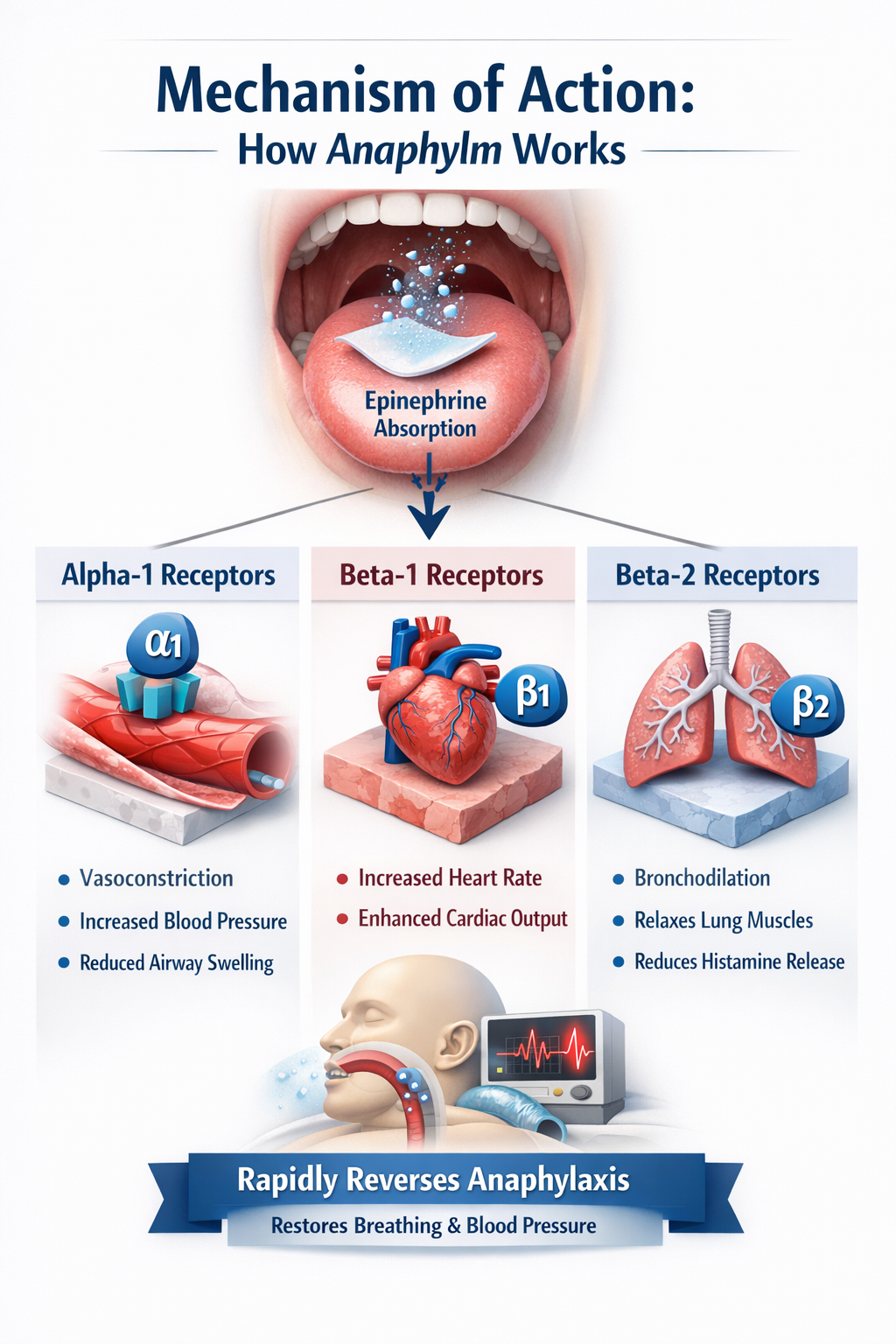
Anaphylm contains epinephrine, which acts on:
1. Alpha-1 Adrenergic Receptors
- Causes vasoconstriction
- Increases blood pressure
- Reduces mucosal edema in airways
2. Beta-1 Adrenergic Receptors
- Increases heart rate
- Improves cardiac output
3. Beta-2 Adrenergic Receptors
- Causes bronchodilation
- Relaxes smooth muscles in lungs
- Reduces mediator release from mast cells
Therefore, when someone asks what is anaphylm, the medical answer includes that it works through adrenergic receptor stimulation to rapidly reverse airway obstruction and circulatory collapse.
Because Anaphylm dissolves orally, it allows systemic absorption of epinephrine without injection, offering a potentially needle-free emergency alternative.
How Anaphylm Is Administered ?
If you are researching what is anaphylm, administration technique is important.
- The thin film is placed on or under the tongue.
- It dissolves rapidly.
- Epinephrine is absorbed through oral mucosa.
- Emergency services should still be called immediately after use.
The goal is to simplify emergency treatment, particularly for children or individuals fearful of injections.
FDA Approval Status
Another important part of answering what is anaphylm involves regulatory status.
Anaphylm has undergone clinical evaluation to demonstrate:
- Rapid systemic absorption
- Comparable pharmacokinetics to injectable epinephrine
- Safety and tolerability
FDA review processes for epinephrine products typically require demonstration of bioequivalence and emergency usability testing. When discussing what is anaphylm, it is critical to recognize that regulatory approval ensures manufacturing quality, safety data, and clinical effectiveness.On February 2, 2026 FDA approved anaphylm for Anaphylaxis.
Patients should always verify the current FDA approval status before use.
Clinical Advantages
When evaluating what is anaphylm, several potential advantages stand out:
1. Needle-Free Delivery
Reduces anxiety in children and adults with needle phobia.
2. Compact Design
Thin film may be easier to carry than bulkier auto-injectors.
3. Rapid Administration
No injection training required.
4. Potentially Increased Compliance
May encourage patients to carry medication consistently.
Side Effects
Any explanation of what is anaphylm must include safety considerations.
Because Anaphylm delivers epinephrine, side effects are consistent with adrenergic stimulation.
Common Side Effects
- Increased heart rate (tachycardia)
- Palpitations
- Anxiety
- Headache
- Tremors
- Sweating
- Dizziness
Less Common but Serious Effects
- Cardiac arrhythmias
- Hypertension
- Chest pain
- Pulmonary edema (rare)
Although side effects may sound concerning, epinephrine remains life-saving. The benefits far outweigh risks during anaphylaxis.
Understanding side effects is an essential part of knowing what is anaphylm in real-world emergency settings.
Drug Interactions
When exploring what is anaphylm, drug interaction knowledge is vital.
1. Beta-Blockers
May reduce effectiveness of epinephrine and worsen hypertension.
2. Tricyclic Antidepressants
May enhance cardiovascular effects.
3. MAO Inhibitors
Prolong epinephrine action.
4. Alpha-Blockers
May reduce vasoconstrictive effects.
5. Cardiac Glycosides
Increase risk of arrhythmias.
Healthcare providers should assess patient medication history before prescribing.
Who Should Use Anaphylm?
Understanding what is anaphylm includes identifying appropriate candidates:
- Individuals with diagnosed severe food allergies
- Patients with insect sting allergies
- Patients with history of drug-induced anaphylaxis
- Schools and childcare facilities
- Emergency responders
It is not a replacement for medical care but a first-response treatment.
Storage and Handling
When patients ask what is anaphylm, practical guidance matters.
- Store at room temperature.
- Protect from moisture.
- Do not use expired product.
- Replace after use immediately.
Comparison With Traditional Auto-Injectors
Another angle in answering what is anaphylm is comparison:
| Feature | Anaphylm | Auto-Injector |
| Delivery | Oral film | Intramuscular injection |
| Needle required | No | Yes |
| Portability | Thin film | Bulk device |
| Training complexity | Lower | Moderate |
Both aim to deliver epinephrine quickly. Clinical decisions depend on physician guidance.
Safety Precautions
When considering what is anaphylm, keep in mind:
- Always call emergency services after use.
- May require repeat dosing.
- Patients with heart disease should consult physicians.
- Not a substitute for allergy management plans.
Long-Term Allergy Management
Understanding what is anaphylm should be part of broader allergy care:
- Avoid known triggers.
- Carry emergency medication at all times.
- Wear medical alert identification.
- Follow up with allergist regularly.
Pediatric Considerations
Parents frequently ask, what is anaphylm, especially for children.
Advantages in pediatrics may include:
- Reduced injection fear
- Simpler administration
- Easier school policy integration
However, dosing must match weight guidelines.
Real-World Impact
In emergency medicine, speed saves lives. That is why discussions about what is anaphylm extend beyond convenience. Needle-free epinephrine delivery could improve response rates in community settings.
Conclusion
So ultimately, what is anaphylm?
Anaphylm is an innovative oral epinephrine film designed for emergency treatment of anaphylaxis. It works by stimulating alpha and beta adrenergic receptors, reversing airway constriction, hypotension, and systemic allergic reactions.
Understanding what is anaphylm empowers patients, caregivers, and healthcare professionals to make informed emergency preparedness decisions. While it does not replace emergency care, it may enhance rapid intervention and accessibility in life-threatening allergic reactions.
If you or your loved one is at risk for severe allergies, speak with a qualified healthcare provider to determine whether this treatment option is appropriate.