
Table of Contents
Linaclotide is a commonly prescribed medication for digestive disorders that involve chronic constipation. While many patients experience significant relief, it is essential to clearly understand what are the side effects of linaclotide before starting or continuing treatment. Awareness of both mild and serious side effects can help patients avoid complications and use the medication safely.
This comprehensive guide explores what are the side effects of linaclotide, why they occur, who is most at risk, and how to manage them effectively.
What Is Linaclotide and Why Is It Prescribed?
Linaclotide is an oral prescription medicine used to treat adults with:
- Irritable bowel syndrome with constipation (IBS-C)
- Chronic idiopathic constipation (CIC)
It works locally in the intestines to increase fluid secretion and improve bowel movement frequency. Because it is minimally absorbed into the bloodstream, most adverse reactions affect the gastrointestinal tract rather than the entire body.
Despite its benefits, understanding what are the side effects of linaclotide is crucial for informed decision-making.
How Linaclotide Works Inside the Digestive System
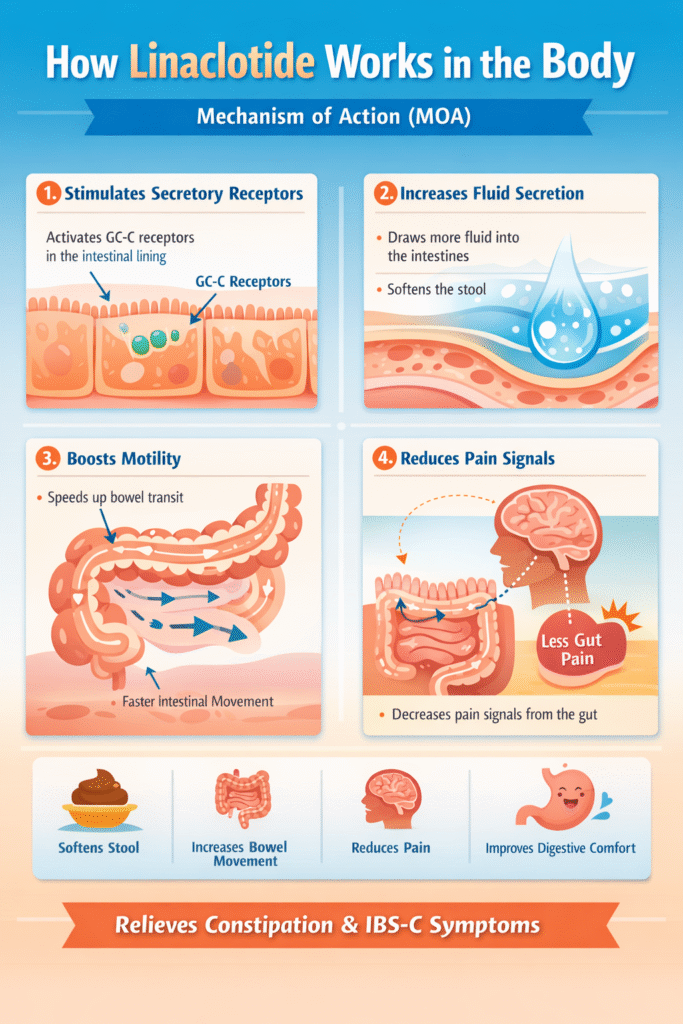
Linaclotide activates receptors on the intestinal lining that increase intestinal fluid and speed up bowel movement. This mechanism softens stools and reduces abdominal discomfort.
However, the same mechanism responsible for therapeutic benefits can also lead to side effects such as diarrhea, bloating, and abdominal pain.
What Are the Side Effects of Linaclotide?
Most Common Side Effects of Linaclotide
1. Diarrhea – The Most Frequent Side Effect
When patients ask what are the side effects of linaclotide, diarrhea is the most common answer.
Characteristics include:
- Loose or watery stools
- Increased stool frequency
- Urgency to pass stools
- Usually begins within the first 1–2 weeks
For most patients, diarrhea is mild to moderate and improves over time. However, persistent or severe diarrhea should never be ignored.
2. Abdominal Pain and Cramping
Abdominal pain may occur as the intestines become more active. Patients often describe:
- Cramping sensations
- Lower abdominal discomfort
- Temporary pain after bowel movements
These symptoms typically lessen as the digestive system adjusts.
3. Bloating and Abdominal Distension
Bloating is another frequent complaint. It may present as:
- A feeling of fullness
- Visible abdominal swelling
- Pressure in the stomach area
This effect is usually temporary and manageable.
4. Gas (Flatulence)
Increased intestinal activity may cause excessive gas. While uncomfortable, gas is not dangerous and usually decreases with continued use.
5. Nausea
Some patients experience mild nausea, especially early in treatment. Taking linaclotide exactly as prescribed may help reduce nausea.
Less Common Side Effects of Linaclotide
Although less frequent, the following side effects have been reported:
- Headache
- Mild dizziness
- Fatigue
- Upper respiratory discomfort
These effects are generally short-lived and do not require stopping the medication unless persistent.
Serious Side Effects of Linaclotide
Understanding what are the side effects of linaclotide includes recognizing serious reactions that require immediate attention.
1. Severe Diarrhea and Dehydration
Severe diarrhea can cause:
- Significant fluid loss
- Dehydration
- Low blood pressure
- Dizziness or fainting
This is the most serious risk associated with linaclotide. Patients should stop the medication immediately and seek medical care if severe diarrhea occurs.
2. Electrolyte Imbalance
Excessive fluid loss may disturb electrolyte balance, leading to:
- Muscle cramps
- Weakness
- Confusion
- Heart rhythm disturbances
Electrolyte imbalance is more likely in elderly patients or those taking medications affecting fluid balance.
3. Allergic Reactions (Rare)
Rare allergic reactions may include:
- Skin rash or itching
- Swelling of the face or lips
- Difficulty breathing
Emergency medical attention is required if these symptoms develop.
Side Effects of Linaclotide in Children
Linaclotide must not be used in children under 2 years of age due to the risk of severe dehydration.
In older children, safety concerns remain, and use should only occur under strict medical supervision.
Side Effects of Linaclotide in Elderly Patients
Older adults are more susceptible to:
- Dehydration
- Dizziness
- Electrolyte imbalance
Close monitoring of hydration and bowel habits is essential in elderly patients.
Who Is at Higher Risk of Linaclotide Side Effects?
You may have a higher risk if you:
- Are over 65 years old
- Have kidney or heart disease
- Take diuretics
- Have poor fluid intake
- Are prone to dehydration
Understanding what are the side effects of linaclotide is especially important for these populations.
Drug Interactions and Safety Precautions
Linaclotide has minimal systemic absorption, so major drug interactions are uncommon. However, combining it with other laxatives or medications that affect hydration can increase the risk of side effects.
Always inform your healthcare provider about all medications and supplements you are taking.
Pregnancy and Breastfeeding Considerations
Limited data is available regarding linaclotide use during pregnancy and breastfeeding. The medication should only be used if the potential benefit outweighs the risk.
How to Reduce Side Effects of Linaclotide
Practical Patient Tips
- Take linaclotide on an empty stomach before the first meal
- Drink adequate fluids daily
- Avoid skipping meals
- Monitor bowel movements closely
- Avoid combining with other laxatives without advice
These steps can help minimize side effects and improve tolerance.
When Should You Stop Taking Linaclotide?
Stop linaclotide and seek medical care if you experience:
- Severe or persistent diarrhea
- Dizziness or fainting
- Signs of dehydration
- Allergic reactions
Long-Term Use and Monitoring
For many patients, linaclotide can be used long-term with proper monitoring. Regular follow-ups help ensure side effects are identified early.
Patient Awareness and Education
Understanding what are the side effects of linaclotide empowers patients to:
- Recognize early warning signs
- Prevent complications
- Communicate effectively with healthcare providers
Final Thoughts
Linaclotide offers meaningful relief for chronic constipation and IBS-C, but awareness of side effects is essential. Diarrhea remains the most common concern, and in rare cases, it can become serious.
By understanding what are the side effects of linaclotide, patients can use this medication safely, confidently, and effectively.
Frequently Asked Questions (FAQs)
1.What are the side effects of linaclotide most commonly reported?
2.How soon do side effects appear?
3.Can linaclotide cause dehydration?
4.Are linaclotide side effects permanent?
5.Is linaclotide safe for long-term use?
Medical Disclaimer
What Are the Side Effects of Linaclotide? An In-Depth Safety Guide for Patients this content is for educational purposes only and does not replace professional medical advice. Always consult a healthcare provider before starting or stopping any medication.