

Table of Contents
Patients often see dramatic improvement in symptoms, but many people ask one important question before starting treatment: what are the side effects of Dupixent? Understanding the benefits and risks of this medication can help you or your loved one make an informed decision. Dupixent (generic name dupilumab) is a prescription biologic medication that has revolutionized the treatment of certain chronic inflammatory conditions. It is widely used for moderate to severe eczema (atopic dermatitis), asthma, chronic rhinosinusitis with nasal polyps (CRSwNP), and more recently, eosinophilic esophagitis (EoE).
This guide provides detailed information about what Dupixent side effects are, how they occur, who may be at risk, ways to manage them, and important precautions
Introduction to Dupixent
Dupixent is a monoclonal antibody that works by blocking two specific proteins in the immune system: IL-4 and IL-13. These proteins are key drivers of inflammation in allergies and immune-mediated diseases. By targeting them, Dupixent reduces inflammation and helps control long-term symptoms.
Since its FDA approval in 2017, Dupixent has become a leading therapy for patients who have not responded well to traditional treatments such as steroids or inhalers. However, as with every medication, patients need to ask: What are the side effects of Dupixent before deciding to use it.
Why It’s Important to Know the Side Effects
Every patient reacts differently to medications. Some may only have mild discomfort, while others may experience more serious reactions. Knowing what the side effects of Dupixent are can help patients:
• Recognize early warning signs.
• Report problems to their doctor.
• Manage side effects effectively.
• Balance the benefits against the risks.
Side Effects of Dupixent
Common Side Effects of Dupixent
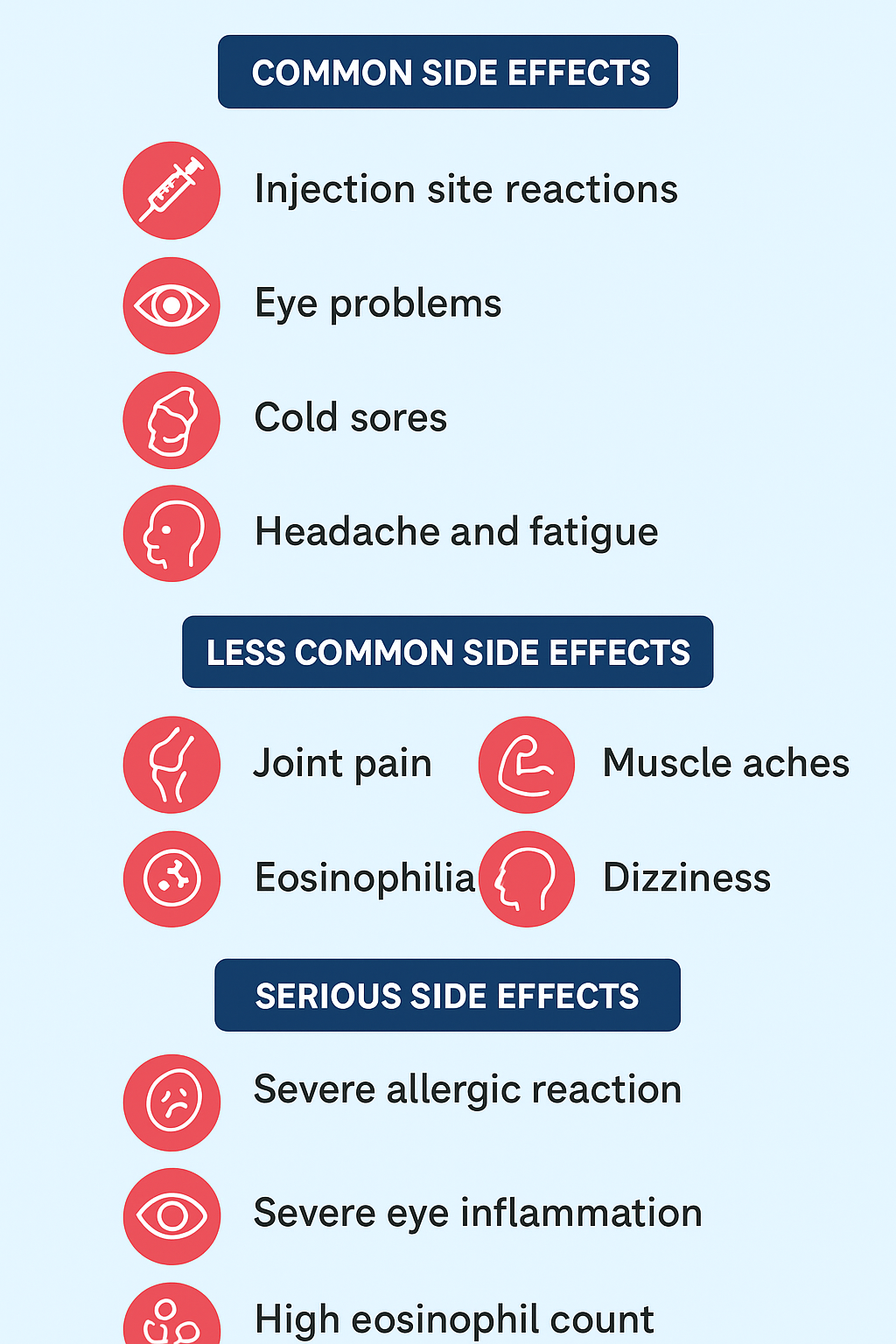
When discussing what are side effects of Dupixent, the most frequently reported include:
Since its FDA approval in 2017, Dupixent has become a leading therapy for patients who have not responded well to traditional treatments such as steroids or inhalers. However, as with every medication, patients need to ask: What are the side effects of Dupixent ? before deciding to use it. Every patient reacts differently to medications. Some may only have mild discomfort, while others may experience more serious reactions. Knowing what the side effects of Dupixent are can help patients recognize early warning signs, report problems to their doctor, manage side effects effectively, and balance the benefits against the risks. Common side effects of Dupixent often include:
1. Injection Site Reactions
- Redness
- Swelling
- Itching
- Pain at the injection site
These are among the most common complaints when patients ask what are the side effects of Dupixent They are usually mild and go away on their own.
2. Eye Problems
Dupixent is known to cause conjunctivitis (pink eye), eye itching, or dry eyes in some people. Patients often search “what are the side effects of Dupixent on the eyes” because these can be bothersome. Artificial tears or eye drops are usually recommended.
3. Cold Sores (Herpes Simplex)
Some patients notice an increase in oral herpes outbreaks. This is another frequent mention when listing what are side effects of Dupixent.
4. Headache and Fatigue
Although not severe, some patients report headaches and tiredness. These symptoms are important in understanding what are the side effects of Dupixent because they may impact quality of life.
Less Common Side Effects of Dupixent
Not every patient experiences these, but they are documented:
- Joint pain
- Muscle aches
- Eosinophilia (increase in a type of white blood cells)
- Allergic reactions
- Dizziness
These are rarer but still answer the question, what are side effects of Dupixent beyond the common ones?
Serious Side Effects of Dupixent
When people ask, what are the side effects of Dupixent that require medical attention?, the following are considered serious and need immediate evaluation:
- Severe allergic reaction (anaphylaxis) – swelling of face, lips, or throat, difficulty breathing.
- Severe eye inflammation – vision changes, intense pain, or swelling.
- High eosinophil count complications – chest pain, worsening breathing, fever.
Although rare, these side effects highlight why it is essential to understand what are the side effects of Dupixent before starting treatment.
Long-Term Side Effects of Dupixent
Many patients wonder: “If I take this medication for years, what are the side effects of Dupixent long-term?” Research so far suggests Dupixent is relatively safe for long-term use, but possible risks include:
- Persistent eye inflammation
- Ongoing cold sore outbreaks
- Rare immune-related complications
Because this is a newer drug, studies are still being conducted to fully answer what are the side effects of Dupixent over long periods.
Dupixent and Specific Conditions
1. Atopic dermatitis (eczema)
For eczema, Dupixent’s side effects include injection site irritation and eye problems. Patients generally tolerate it better than steroids.
2. Asthma
In asthma patients, Dupixent’s side effects are similar, but doctors also monitor eosinophilia. This is important in people with severe asthma.
3. Chronic rhinosinusitis with nasal polyps
Patients may ask, what are the side effects of Dupixent when treating nasal polyps? Eye irritation, along with throat discomfort, remains common.
4. Eosinophilic esophagitis (EoE)
Because this is a newly approved use, more research is needed. Still, the side effects of Dupixent for EoE generally match those seen previously.
Managing the Side Effects of Dupixent
Patients often ask not only what are the side effects of Dupixent , but also how to manage them. Here are some strategies:
• Injection site problems: Rotate injection areas, apply ice packs.
• Eye irritation: Use preservative-free artificial tears.
• Cold sores: Talk to your doctor about antiviral treatment.
• Headaches: Stay hydrated, rest, and use mild pain relievers.
By knowing the side effects of Dupixent and managing them, patients can continue to benefit from the medication.
Dupixent vs. Other Biologics: Do Side Effects Differ?
Biologics such as Humira, Enbrel, or Stelara are sometimes compared to Dupixent. When asked what the side effects of Dupixent are compared to others, the main difference is the lower risk of systemic infections. Unlike TNF-blockers, Dupixent does not suppress the immune system to a large extent, which makes it relatively safe.
Who Should Be Cautious with Dupixent?
When considering the side effects of Dupixent, it is important to note who may be at higher risk:
• Patients with eye diseases (risk of changes).
• People who are prone to colds.
• People with high eosinophil counts.
• Patients who are allergic to dupixent or its components.
Patient Experiences
Real-world feedback helps answer the questions about what Dupixent side effects are in everyday life. Some patients report life-changing relief from eczema or asthma, while others complain of bothersome eye problems. Patient stories highlight the importance of closely monitoring side effects.
Conclusion
So, what are the side effects of Dupixent? The answer depends on the individual, but the most common are injection site reactions, eye irritation, cold sores, headache, and fatigue. Less common but serious risks are allergic reactions and problems related to eosinophilia.
Overall, Dupixent is considered a safe and effective treatment for many patients with chronic inflammatory conditions. Knowing what the side effects of Dupixent are can help patients stay informed, work closely with their healthcare providers, and take control of their health journey.
Frequently Asked Questions (FAQs)
Q1: What are side effects of Dupixent in children?
Q2: What are side effects of Dupixent if I miss a dose?
Q3: What are side effects of Dupixent on the immune system?
Q4: What are side effects of Dupixent if taken with other medications?
Q5: What are the side effects of Dupixent during pregnancy?
Disclaimer
This article is for educational purposes only and is not a substitute for medical advice. Always consult your healthcare provider before starting, stopping, or changing any medication.