Table of Contents
Introduction: Understanding Tavapadon and Its Role in Parkinson’s Disease
Tavapadon is a promising investigational drug being developed for the treatment of Parkinson’s disease (PD), a neurodegenerative disorder that affects movement control. Belonging to a class of drugs called dopamine D1/D5 receptor partial agonists, Tavapadon aims to improve motor function by increasing dopamine signaling in specific brain regions.
Unlike traditional dopamine agonists that stimulate dopamine receptors broadly, Tavapadon selectively targets D1/D5 receptors. This focused action may provide relief from motor symptoms and reduce some of the adverse effects associated with older medications. However, like all central nervous system (CNS)-active drugs, Tavapadon is not without risks. It is important for patients, caregivers, and healthcare professionals to understand Tavapadon Side Effects .
In this detailed guide, we will explore the side effects of Tavapadon – from mild and manageable to rare but serious – providing insight into symptom recognition, management, and prevention strategies.
What is Tavapadon?
Tavapadon (development code: CVL-751) is being developed by Cereval Therapeutics. It acts as a selective dopamine D1/D5 receptor partial agonist and is currently being investigated for early and late stages of Parkinson’s disease.
Mechanism of action
Parkinson’s disease is caused by the loss of dopamine-producing neurons in the brain. Dopamine is important for controlling smooth and coordinated muscle movements. Tavapadon works by stimulating dopamine D1/D5 receptors in motor areas of the brain, helping to restore dopaminergic signaling and improve motor performance.
Due to its receptor selectivity, Tavapadon may provide the therapeutic benefits of dopamine stimulation with fewer side effects (such as dyskinesia, impulse control disorders, and hallucinations) associated with D2 receptor activation.
Overview of Tavapadon Side Effects
Every medication that alters brain chemistry carries potential side effects. Tavapadon is no exception. Its side effects can be categorized into three main groups:
- Common side effects: Frequently observed in clinical studies.
- Uncommon side effects: Occur less often but still clinically relevant.
- Rare or serious side effects: Require immediate medical attention.
Before diving into specifics, remember that individual experiences vary. Not everyone will experience the same side effects, and severity often depends on dose, treatment duration, and personal sensitivity.
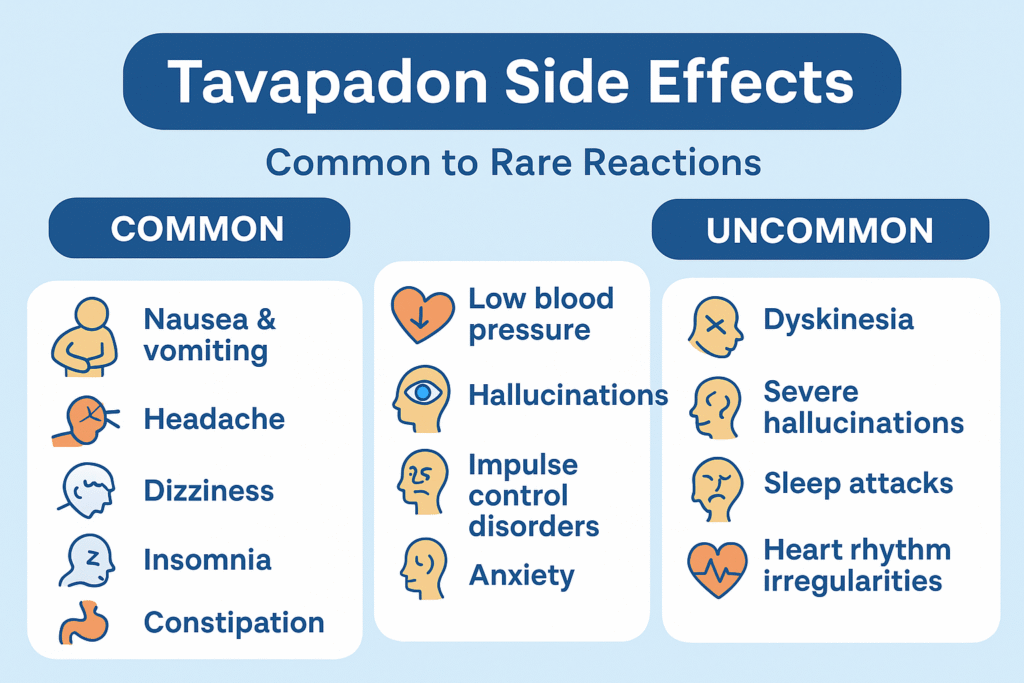
1.Common Tavapadon Side Effects
These side effects were most commonly reported during clinical trials and are generally mild to moderate in intensity. They tend to appear as the body adjusts to the medication and may improve over time.
Nausea and Vomiting
- Cause: Dopamine stimulation in the brain’s chemoreceptor trigger zone can induce nausea.
- Management Tips: Taking Tavapadon with food, staying hydrated, or using prescribed antiemetics can help.
Headache
- Why It Happens: Dopaminergic modulation may temporarily affect blood vessel tone or neurotransmitter balance.
- Relief Measures: Adequate rest, hydration, and mild pain relievers (as approved by a doctor).
Dizziness or Lightheadedness
- Cause: Dopamine agonists can lower blood pressure (orthostatic hypotension).
- Prevention: Rise slowly from sitting or lying positions; avoid sudden movements.
Insomnia or Sleep Disturbances
- Description: Some patients report difficulty sleeping or increased wakefulness.
- Management: Maintain good sleep hygiene and avoid caffeine close to bedtime.
Fatigue and Drowsiness
- Why It Occurs: As the brain adjusts to dopaminergic stimulation, fatigue or sudden sleepiness may appear.
- Precaution: Avoid driving or operating machinery until the body adapts.
Constipation
- Explanation: Dopamine agonists may slow gut motility.
- Management: Increase dietary fiber, fluid intake, and physical activity.
Dry Mouth
- Cause: Reduced saliva production is a known dopaminergic side effect.
- Relief: Sugar-free lozenges, increased water intake, and good oral hygiene.
2.Uncommon Tavapadon Side Effects
While less frequent, these side effects can still impact comfort and treatment adherence. Monitoring and early management can reduce complications.
Low Blood Pressure (Orthostatic Hypotension)
- Symptoms: Dizziness, fainting, or blurred vision upon standing.
- Advice: Monitor blood pressure regularly; avoid alcohol and dehydration.
Hallucinations or Confusion
- Explanation: Dopaminergic drugs can overstimulate brain pathways involved in perception and cognition.
- Prevention: Report any unusual sensory experiences to your physician immediately.
Impulse Control Disorders (ICDs)
- Examples: Compulsive gambling, shopping, eating, or hypersexuality.
- Reason: Overactivation of reward pathways in the brain.
- Management: Early recognition, dose adjustment, or switching medication under supervision.
Anxiety or Nervousness
- Possible Cause: Dopamine receptor imbalance affecting mood-regulating areas.
- Tip: Stress management techniques and supportive counseling may help.
Sweating and Temperature Regulation Issues
- Explanation: Dopaminergic effects on the autonomic nervous system can alter sweating.
- Advice: Stay hydrated and wear breathable clothing.
3. Rare but Serious Tavapadon Side Effects
Some adverse effects are uncommon but potentially severe. Immediate medical evaluation is recommended if these occur.
Dyskinesia (Involuntary Movements)
- Description: Uncontrolled muscle movements or twitching, often dose-related.
- Cause: Overstimulation of dopamine pathways.
- Management: Physician may reduce dosage or adjust concurrent therapies.
Severe Hallucinations or Psychosis
- Warning Signs: Visual or auditory hallucinations, paranoia, or disorganized thinking.
- Action: Seek urgent medical help; medication adjustment is essential.
Sleep Attacks
- Explanation: Sudden, uncontrollable sleep episodes without warning.
- Risk: Can be dangerous during activities like driving.
- Precaution: Avoid driving or operating machinery until response is known.
Heart Rhythm Irregularities
- Symptoms: Palpitations, chest pain, or fainting.
- Action: Contact emergency services immediately.
Allergic Reactions
- Signs: Rash, itching, swelling, or breathing difficulties.
- Response: Stop medication and seek emergency care.
4. Long-Term Tavapadon Side Effects
Long-term use of dopaminergic agents can sometimes lead to cumulative effects. Ongoing monitoring by healthcare providers is essential.
- Motor Fluctuations: “On-off” episodes where symptom control varies throughout the day.
- Cognitive Changes: Possible mild memory issues or confusion in older patients.
- Emotional Disturbances: Mood swings or depression due to neurotransmitter alterations.
- Tolerance Development: Some users may require dose adjustments over time.
Regular follow-up appointments and personalized dose titration help minimize these long-term complications.
Managing Tavapadon Side Effects
Managing side effects involves a combination of medical supervision, lifestyle adjustments, and self-care strategies.
Regular Monitoring
Your doctor may perform:
- Blood pressure checks
- Neurological assessments
- ECGs or sleep evaluations if symptoms arise
Dosage Optimization
Gradual dose titration can reduce the intensity of side effects. Never change your dosage without consulting your physician.
Supportive Care Tips
- Maintain a balanced diet rich in fiber and fluids.
- Avoid sudden posture changes to reduce dizziness.
- Report mental health changes promptly.
- Stay active with safe physical exercise to enhance motor control and well-being.
Who Should Use Tavapadon with Caution?
Certain individuals are more prone to adverse reactions. Tavapadon should be used carefully—or avoided—in the following groups:
- Elderly patients: Higher sensitivity to hallucinations and confusion.
- Individuals with cardiovascular disorders: Monitor for hypotension or arrhythmias.
- Patients with psychiatric conditions: Increased risk of psychosis or impulse control issues.
- Pregnant or breastfeeding women: Safety not fully established; use only if benefits outweigh risks.
- Liver or kidney impairment: Slower drug clearance may increase side effect risk.
When to Seek Immediate Medical Attention
Seek urgent care if any of the following occur:
- Severe dizziness, fainting, or rapid heartbeat
- Sudden sleep attacks
- New or worsening hallucinations
- Difficulty breathing or facial swelling
- Uncontrollable movements (dyskinesia)
- Persistent vomiting or confusion
These may indicate a serious reaction requiring prompt intervention.
Reducing the Risk of Side Effects
While not all side effects are preventable, the following practices can reduce their likelihood:
- Follow dosage instructions strictly.
- Avoid alcohol and sedatives unless approved by a doctor.
- Stay hydrated and avoid overheating.
- Track your symptoms in a diary to discuss with your neurologist.
- Have regular follow-ups to assess medication effectiveness and safety.
- Report early symptoms of hallucinations or mood changes.
Proactive communication between patients and healthcare teams is key to minimizing risks.
Comparison with Other Dopamine Agonists
Tavapadon’s side effect profile may differ slightly from older dopamine agonists like pramipexole, ropinirole, or rotigotine.
| Feature | Tavapadon | Traditional Dopamine Agonists |
| Receptor Selectivity | D1/D5 selective | Broad D1–D3 activation |
| Common Side Effects | Nausea, dizziness, headache | Nausea, somnolence, orthostatic hypotension |
| Risk of Impulse Control Disorders | Possibly lower | Higher |
| Risk of Dyskinesia | Dose-dependent | Common |
| Psychiatric Side Effects | Reduced frequency (potentially) | Frequent in elderly |
This selectivity could make Tavapadon a safer long-term option, though further studies are needed to confirm its comparative advantages.
Patient Education and Lifestyle Support
A comprehensive treatment plan for Parkinson’s should integrate:
- Medication adherence
- Physical therapy
- Speech and occupational therapy
- Nutritional guidance
- Mental health support
Educated patients are better equipped to recognize early warning signs of side effects and collaborate effectively with healthcare providers.
Conclusion: Balancing Benefits and Risks of Tavapadon
Tavapadon is a significant advance in Parkinson’s therapy, offering hope for improved symptom control by reducing dopaminergic side effects. However, as with all neurological medications, caution is essential. By understanding the side effects of Tavapadon – ranging from mild discomfort to serious complications – patients can proactively work with their healthcare professionals to ensure a safe and effective treatment journey. Regular monitoring, clear communication, and adherence to prescribed guidance form the foundation for the safe use of Tavapadon.