Table of Contents
Have you ever taken a common painkiller, cold syrup, or herbal supplement without a prescription and assumed it was completely harmless—only because it was sold over the counter?
This question matters more than most people realize, because many OTC medicines that can harm your liver are used daily by millions of individuals worldwide, often without understanding the long-term consequences.
The liver is the body’s primary detoxification organ. Nearly every drug you swallow is metabolized here. While prescription medicines are closely monitored, over-the-counter (OTC) medicines often create a false sense of safety, leading to misuse, overdose, or chronic exposure. Over time, this can silently damage liver cells, sometimes without obvious symptoms until significant injury has already occurred.
In this in-depth guide, we will explore OTC medicines that can harm your liver, explain how liver damage occurs, and discuss the top 10 commonly used OTC medicines linked to liver toxicity, all in clear, professional language designed to educate and protect patients.
Why the Liver Is Highly Vulnerable to OTC Medicines
The liver plays a central role in drug metabolism through enzymes such as the cytochrome P450 system. When OTC medicines are consumed:
- They are absorbed into the bloodstream
- Transported to the liver
- Broken down into metabolites
- Eliminated through bile or urine
Some medicines produce toxic metabolites, especially when taken in high doses, combined with alcohol, or used for prolonged periods. Repeated exposure can result in:
- Hepatocellular injury
- Cholestatic liver damage
- Drug-induced liver injury (DILI)
- Acute liver failure in severe cases
This is why understanding OTC medicines that can harm your liver is a crucial aspect of safe self-medication.
Top 10 OTC Medicines That Can Harm Your Liver
Below are the most commonly used OTC medicines associated with liver injury, supported by pharmacological and clinical evidence.
1. Acetaminophen (Paracetamol)
Acetaminophen is the leading cause of drug-induced liver failure worldwide.
How it harms the liver:
At therapeutic doses, acetaminophen is safely metabolized. However, overdose or chronic use depletes glutathione, allowing a toxic metabolite (NAPQI) to damage liver cells.
Risk factors:
- Exceeding daily dose limits
- Alcohol consumption
- Fasting or malnutrition
- Using multiple acetaminophen-containing products
Among all OTC medicines that can harm your liver, acetaminophen ranks at the top due to its widespread availability and narrow safety margin.
2. Ibuprofen and Other NSAIDs
Non-steroidal anti-inflammatory drugs (NSAIDs) like ibuprofen are commonly used for pain and inflammation.
Liver-related effects:
- Elevated liver enzymes
- Hepatocellular injury
- Rare cases of acute liver failure
Although less hepatotoxic than acetaminophen, chronic or high-dose NSAID use increases liver risk, making them notable OTC medicines that can harm your liver.
3. Diclofenac (OTC Formulations in Some Regions)
Diclofenac is particularly associated with liver toxicity compared to other NSAIDs.
Mechanism of liver injury:
- Immune-mediated liver damage
- Mitochondrial dysfunction
- Oxidative stress
Regular monitoring is recommended during prolonged use, even when obtained without a prescription.
4. Aspirin (Acetylsalicylic Acid)
While aspirin is widely used for pain and cardiovascular protection, excessive use can harm the liver.
Liver risks include:
- Elevated transaminases
- Reye’s syndrome (in children)
- Increased toxicity in chronic alcohol users
Aspirin remains one of the OTC medicines that can harm your liver when misused or taken without proper guidance.
5. Combination Cold and Flu Medicines
Many cold and flu products contain multiple active ingredients, often including acetaminophen.
Why they are dangerous:
- Accidental overdose from duplicate ingredients
- Liver toxicity due to cumulative acetaminophen intake
Patients frequently exceed safe limits unknowingly, making these combinations a hidden contributor to liver damage.
6. Herbal and Dietary Supplements
Herbal products are often perceived as “natural” and safe, but this is misleading.
Examples linked to liver injury:
- Green tea extract
- Kava
- Black cohosh
- Ashwagandha (rare but reported cases)
Unlike prescription drugs, supplements are poorly regulated, making them one of the most underestimated OTC medicines that can harm your liver.
7. Weight-Loss Supplements
Many OTC weight-loss products contain unlisted or hepatotoxic ingredients.
Liver effects:
- Acute hepatitis
- Cholestatic injury
- Liver failure requiring transplantation
These products pose a serious but preventable risk to liver health.
8. Antifungal OTC Products (Oral Formulations)
Some antifungal agents can cause liver enzyme elevations even when used short-term.
Hepatic concerns:
- Dose-dependent toxicity
- Increased risk in patients with pre-existing liver disease
Patients often overlook these risks due to OTC availability.
9. Vitamin A (High-Dose Supplements)
Vitamin A is essential, but excessive intake can be toxic.
Chronic toxicity leads to:
- Fatty liver
- Fibrosis
- Cirrhosis
Long-term use of high-dose vitamin A places it among OTC medicines that can harm your liver when taken without medical supervision.
10. Energy Drinks and OTC Stimulants
Many energy boosters contain concentrated herbal extracts and synthetic compounds.
Liver-related effects:
- Elevated liver enzymes
- Acute hepatitis
- Unknown long-term toxicity
Frequent consumption increases cumulative liver stress.
How OTC Medicine Misuse Leads to Drug-Induced Liver Injury (DILI)
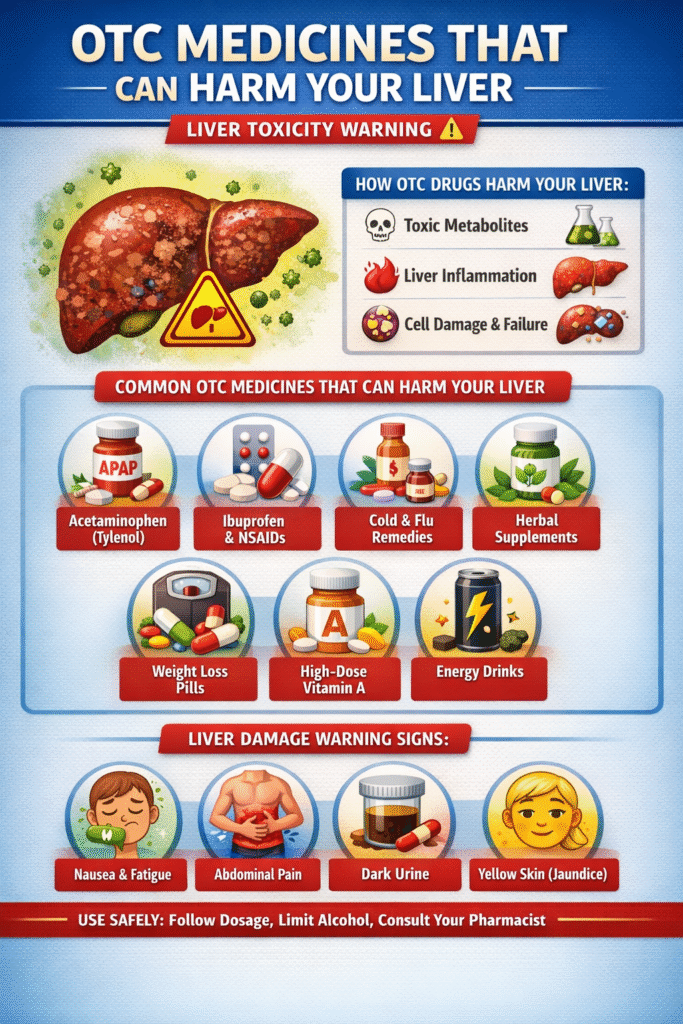
Drug-induced liver injury (DILI) is one of the most common causes of acute liver failure worldwide, and OTC medicines that can harm your liver play a significant role in this preventable condition. Unlike infectious or genetic liver diseases, DILI occurs when liver cells are damaged by chemical substances present in medicines.
OTC medicines may cause liver injury through:
- Direct hepatotoxicity, where toxic metabolites damage liver cells
- Immune-mediated reactions, triggering inflammation
- Mitochondrial dysfunction, leading to cell death
Because symptoms often appear late, many patients continue using the offending OTC medicine, worsening liver damage before diagnosis.
Role of Alcohol in Increasing Liver Toxicity of OTC Medicines
Alcohol consumption dramatically increases the risk associated with OTC medicines that can harm your liver. Alcohol induces liver enzymes that convert certain drugs into more toxic metabolites, especially acetaminophen.
Even moderate drinking combined with OTC painkillers can:
- Lower the safe dose threshold
- Accelerate liver cell injury
- Increase the risk of acute liver failure
Patients often underestimate this interaction, assuming occasional drinking is safe, which makes education essential.
Impact of Long-Term OTC Medicine Use on Liver Health
Long-term, unsupervised use of OTC medicines can lead to cumulative liver toxicity. Even medicines considered safe at short durations may become harmful when taken for weeks or months.
Chronic exposure may result in:
- Fatty liver changes
- Fibrosis development
- Progressive liver dysfunction
This is particularly relevant for elderly patients and those managing chronic pain or inflammation with OTC medicines.
Label Reading Mistakes That Increase Liver Risk
Incorrect label interpretation is a major contributor to liver injury from OTC medicines that can harm your liver.
Common mistakes include:
- Ignoring maximum daily dose warnings
- Overlooking acetaminophen content
- Using multiple brands with the same active ingredient
- Continuing use beyond recommended duration
Educating patients on label reading can significantly reduce preventable harm.
Myths vs Facts About OTC Medicines and Liver Safety
Myth: OTC medicines are completely safe
Fact: Many OTC medicines that can harm your liver are safe only when used correctly
Myth: Natural products do not damage the liver
Fact: Several herbal OTC products are linked to liver injury
Myth: If there are no symptoms, the liver is healthy
Fact: Liver damage can be present without symptoms
Early Warning Signs of Liver Damage
Liver injury often develops silently. Warning signs may include:
- Fatigue and weakness
- Nausea or vomiting
- Loss of appetite
- Dark urine
- Yellowing of skin or eyes (jaundice)
- Upper right abdominal pain
Ignoring these signs while continuing OTC medicine use can worsen liver injury.
Who Is at Higher Risk?
Certain individuals are more vulnerable to liver damage from OTC medicines:
- Chronic alcohol users
- Elderly patients
- Patients with liver disease
- People taking multiple medicines
- Individuals using supplements long-term
For these groups, OTC medicines that can harm your liver pose a significantly higher risk.
How to Use OTC Medicines Safely
To protect liver health:
- Always follow recommended dosages
- Avoid mixing OTC medicines without guidance
- Check labels for duplicate ingredients
- Limit alcohol consumption
- Avoid unnecessary long-term use
- Consult a pharmacist or physician when unsure
Pharmacist-led counseling plays a vital role in preventing drug-induced liver injury.
The Pharmacist’s Perspective on Liver Safety
From a pharmaceutical and quality-assurance standpoint, the misuse of OTC medicines represents a preventable public health issue. Education, labeling awareness, and rational drug use can significantly reduce liver-related adverse events.
Understanding OTC medicines that can harm your liver empowers patients to make safer decisions while reinforcing the pharmacist’s role as a medication safety expert.
Are OTC Medicines Really Safe for Your Liver?
So, returning to the question we started with—are the OTC medicines in your cabinet truly safe?
The answer is not always.
While OTC medicines are effective and accessible, many OTC medicines that can harm your liver become dangerous when misused, overused, or combined improperly. Awareness, education, and responsible use are the true keys to safety.
Your liver works silently to protect you every day. Making informed choices about OTC medicines is one of the most important steps you can take to protect it in return.