Table of Contents
Inclisiran is revolutionizing the approach to cholesterol management, offering a promising solution for individuals at risk of cardiovascular disease.
High levels of LDL cholesterol can lead to serious cardiovascular issues, making effective management crucial. Inclisiran has emerged as a potential game-changer in this area.
By understanding how does inclisiran work, individuals can better appreciate its potential benefits inreducing the risk of cardiovascular disease.
Key Takeaways
- Inclisiran is a novel approach to managing cholesterol levels.
- It targets LDL cholesterol, a key factor in cardiovascular disease.
- Effective cholesterol management can significantly reduce cardiovascular risk.
- Inclisiran offers a promising solution for individuals with high LDL cholesterol.
- Understanding inclisiran’s mechanism can help appreciate its benefits.

Understanding Cholesterol and Cardiovascular Disease
Understanding the role of cholesterol in cardiovascular disease is essential for developing effective management strategies in how does inclisiran work . Cardiovascular disease remains a significant health concern, with high cholesterol being a major risk factor.
The Role of LDL Cholesterol in Heart Disease
LDL cholesterol, often referred to as “bad” cholesterol, plays a crucial role in the development of heart disease. High levels of LDL cholesterol can lead to plaque buildup in the arteries, increasing the risk of heart attacks and strokes. According to the Centers for Disease Control and Prevention (CDC), heart disease is one of the leading causes of death in the United States, emphasizing the need for effective cholesterol management.
Current Challenges in Cholesterol Management
Despite the availability of various cholesterol-lowering medications, managing cholesterol levels remains a challenge for many patients. Factors such as medication adherence, lifestyle changes, and individual tolerance to treatments can impact the effectiveness of current management strategies.
The Need for New Treatment Approaches
The limitations of existing treatments highlight the need for innovative approaches to cholesterol management. New treatments like inclisiran offer promising alternatives for patients who struggle with current management strategies, providing a more effective and sustainable solution for reducing LDL cholesterol levels by guiding how does inclisiran work.
What Is Inclisiran? An Overview of the Novel Medication
Inclisiran represents a significant advancement in the management of cholesterol levels. It is a novel medication that has been developed to address the challenges of managing high cholesterol, particularly for patients who are at risk of cardiovascular disease.
Development History and FDA Approval
Inclisiran has undergone rigorous clinical trials and has received FDA approval for its use in lowering LDL cholesterol. The development of inclisiran is attributed to Novartis, a leading pharmaceutical company. The FDA approval marks a significant milestone in the treatment of hypercholesterolemia, offering a new therapeutic option for patients.
According to a statement from the FDA, “The approval of inclisiran provides a new treatment option for patients with high cholesterol.” This underscores the importance of inclisiran in the current treatment landscape.
Inclisiran as a PCSK9 Inhibitor
Inclisiran functions as a PCSK9 inhibitor, targeting the PCSK9 protein that plays a critical role in the regulation of LDL cholesterol levels. By inhibiting PCSK9, inclisiran effectively reduces the amount of LDL cholesterol in the blood, thereby reducing the risk of cardiovascular events.
| Characteristics | Inclisiran | Other PCSK9 Inhibitors |
| Administration Frequency | Twice a year | Every 2-4 weeks |
| Mechanism of Action | RNA interference | Monoclonal antibodies |
The Company Behind Inclisiran
Novartis, the company behind inclisiran, is a renowned global healthcare company committed to reimagining medicine. With a strong focus on innovation, Novartis has been at the forefront of developing novel treatments for various diseases, including cardiovascular conditions.
The development of inclisiran by Novartis highlights the company’s dedication to improving patient outcomes and addressing unmet medical needs also addresses how does inclisiran work.
How Does Inclisiran Work? The Science Behind the Medication
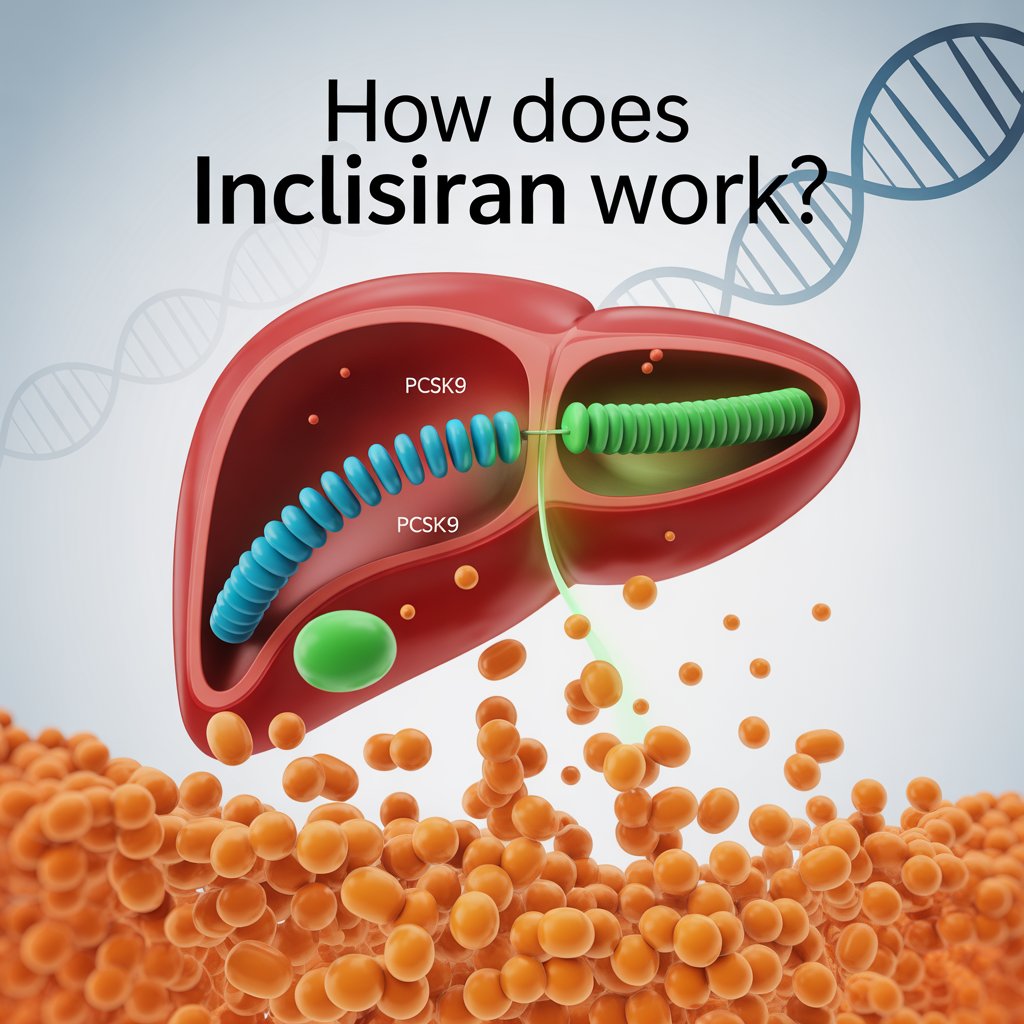
The science behind how does inclisiran work lies in its innovative use of RNA interference, a natural cellular process that regulates gene expression. This mechanism allows inclisiran to target and reduce the production of PCSK9, a protein that plays a crucial role in cholesterol metabolism.
The RNA Interference Mechanism
RNA interference (RNAi) is a biological process in which RNA molecules inhibit gene expression, typically by causing the destruction of specific mRNA molecules. Inclisiran utilizes this mechanism by mimicking the body’s natural RNAi pathway to silence the PCSK9 gene. This results in decreased PCSK9 protein production, which in turn leads to lower LDL cholesterol levels.
Targeting PCSK9 Production in the Liver
The liver is the primary site of PCSK9 production, and inclisiran is specifically designed to target this organ. By delivering the siRNA (small interfering RNA) to liver cells, inclisiran effectively reduces PCSK9 production. This targeted approach minimizes potential off-target effects and enhances the drug’s efficacy.
Long-lasting Effects on LDL Cholesterol Levels
how does inclisiran work not only reduces PCSK9 production but also results in sustained lowering of LDL cholesterol levels. The drug’s long-lasting effect is attributed to its ability to remain in the liver cells for an extended period, continuously suppressing PCSK9 production.
The Molecular Pathway
The molecular pathway involved in inclisiran’s action begins with the uptake of siRNA by liver cells. Once inside, the siRNA is incorporated into the RNA-induced silencing complex (RISC), which then targets and degrades PCSK9 mRNA. This degradation prevents the translation of PCSK9 protein, thereby reducing its levels.
Duration of Action
One of the key advantages of inclisiran is its prolonged duration of action. Clinical trials have shown that a single dose of inclisiran can significantly lower LDL cholesterol levels for several months. This extended efficacy is due to the stability of the siRNA within liver cells and its continued suppression of PCSK9 production.
Key benefits of how does inclisiran work include:
- Effective reduction of PCSK9 production
- Sustained lowering of LDL cholesterol levels
- Targeted action in the liver
- Long-lasting effects with infrequent dosing
The Revolutionary Approach of Small Interfering RNA (siRNA)
Small interfering RNA (siRNA) represents a groundbreaking approach in the field of genetics, offering new avenues for treating conditions like hypercholesterolemia. This innovative technology has been gaining attention for its potential in treating genetic disorders by precisely silencing disease-causing genes.
How siRNA Technology Differs from Traditional Medications
Unlike traditional medications that often have broader effects on the body, siRNA technology is highly targeted. It works by specifically silencing the gene responsible for producing a particular protein, in this case, PCSK9, which is involved in cholesterol regulation. This targeted approach can lead to fewer side effects and more effective treatment and guid how does inclisiran work.
The Precision of Gene Silencing
The precision of siRNA in gene silencing is one of its most significant advantages. By directly targeting the messenger RNA (mRNA) that codes for a specific protein, siRNA prevents the production of that protein. This precision medicine approach allows for a more nuanced treatment strategy, potentially improving patient outcomes.
Implications for Other Medical Treatments
The implications of siRNA technology extend far beyond cholesterol management. Its ability to silence specific genes makes it a promising tool for treating a wide range of genetic disorders. As research continues to advance, we can expect to see novel therapeutic approaches emerging in various fields of medicine.
Inclisiran vs. Traditional Cholesterol Medications
how does inclisiran work is it apart from traditional cholesterol-lowering medications. As a small interfering RNA (siRNA) therapy, inclisiran targets PCSK9 production in the liver, offering a novel approach to managing LDL cholesterol levels.
Comparison with Statins
Statins are the most commonly prescribed cholesterol-lowering medications. While effective, they can have limitations, such as muscle pain and liver enzyme elevation in some patients. Inclisiran, on the other hand, has shown a different side effect profile and can be considered for patients who cannot tolerate statins or require additional LDL lowering.
Differences from Other PCSK9 Inhibitors
Inclisiran is a PCSK9 inhibitor, but unlike monoclonal antibodies like evolocumab and alirocumab, it works through RNA interference. This results in a longer duration of action, allowing for less frequent dosing.
Advantages of Inclisiran’s Dosing Schedule
Inclisiran’s dosing schedule is a significant advantage, with injections required only twice a year after initial doses. This can improve patient compliance compared to more frequent dosing regimens.
Combination Therapy Possibilities
Inclisiran can be used in combination with statins or other lipid-lowering therapies to achieve more significant LDL reductions. Studies have shown that combination therapy can be particularly effective in high-risk patients.
| Medication | Dosing Frequency | Mechanism of Action |
| Inclisiran | Twice a year | how does inclisiran work ? RNA interference targeting PCSK9 |
| Statins | Daily | HMG-CoA reductase inhibition |
| Evolocumab/Alirocumab | Every 2 weeks or monthly | Monoclonal antibodies against PCSK9 |
Clinical Evidence: Efficacy of Inclisiran in Reducing Cholesterol
Clinical trials, specifically the ORION program, have provided substantial evidence for inclisiran’s effectiveness in lowering cholesterol levels. The ORION trials have been comprehensive, involving various patient populations and providing insights into both the efficacy and safety of inclisiran.
Results from the ORION Clinical Trials
The ORION clinical trials have been pivotal in establishinghow does inclisiran work in cholesterol management. These trials have not only demonstrated inclisiran’s efficacy but have also provided valuable data on its long-term effectiveness and safety profile.
ORION-1 and Early Phase Results
ORION-1, one of the initial trials, showed promising results with significant reductions in LDL cholesterol levels among participants. Early phase results indicated that inclisiran could be a viable option for patients requiring additional LDL-lowering therapy beyond statins.
ORION-9, 10, and 11 Findings
The subsequent ORION trials (ORION-9, 10, and 11) further reinforced the efficacy of inclisiran. These trials demonstrated consistent and sustained reductions in LDL cholesterol across diverse patient populations, including those with heterozygous familial hypercholesterolemia (HeFH) and atherosclerotic cardiovascular disease (ASCVD).
| Trial | Patient Population | LDL Reduction |
| ORION-1 | High-risk patients | Up to 50% |
| ORION-9 | HeFH patients | Up to 48% |
| ORION-10 | ASCVD patients | Up to 58% |
| ORION-11 | High-risk patients | Up to 52% |
Long-term Effectiveness Data
Long-term data from the ORION trials have shown that inclisiran maintains its efficacy over time, with sustained reductions in LDL cholesterol levels. This is crucial for patients requiring ongoing management of their cholesterol levels.
Impact on Various Patient Populations
Inclisiran has been shown to be effective across different patient populations, including those with HeFH and ASCVD. Its ability to significantly lower LDL cholesterol makes it a valuable treatment option for patients at high risk of cardiovascular events.

Safety Profile and Potential Side Effects
Understanding the safety profile of inclisiran is essential for determining how does inclisiran work, its place in the treatment of cardiovascular diseases. As with any medication, inclisiran’s safety has been rigorously evaluated in clinical trials.
Common Side Effects
The most common side effects associated with inclisiran include injection site reactions, such as redness, swelling, or pain. These reactions are typically mild and transient.
Rare Adverse Reactions
Rare adverse reactions have been reported, including hypersensitivity reactions. It’s crucial for patients to be monitored for any signs of an allergic reaction.
Long-term Safety Considerations
Long-term safety data from ongoing studies will provide further insights into the potential risks associated with prolonged use of inclisiran.
Monitoring Requirements
Regular monitoring of liver function and other relevant health parameters is recommended for patients on inclisiran.
| Side Effect | Frequency | Severity |
| Injection Site Reaction | Common | Mild |
| Hypersensitivity Reaction | Rare | Severe |
Who Is a Good Candidate for Inclisiran?
Determining the right candidate for inclisiran involves understanding its eligibility criteria and potential contraindications. Inclisiran is primarily prescribed for adults with heterozygous familial hypercholesterolemia or clinical atherosclerotic cardiovascular disease who require additional lowering of LDL cholesterol.
Eligibility Criteria
Patients eligible for inclisiran typically have high or very high-risk cardiovascular disease and have not achieved sufficient LDL cholesterol reduction with statins or other cholesterol-lowering therapies. Guidelines recommend considering PCSK9 inhibitors, like inclisiran, for patients with LDL levels above certain thresholds despite maximally tolerated statin therapy.
Contraindications
Inclisiran is contraindicated in patients with known hypersensitivity to the active substance or any of the excipients. It is also not recommended during pregnancy and breastfeeding due to potential risks to the fetus or infant.
Special Populations
Elderly Patients: No dose adjustment is required for elderly patients, as inclisiran’s pharmacokinetics are not significantly affected by age.
Renal Impairment: Inclisiran can be used in patients with mild or moderate renal impairment without dose adjustment. However, caution is advised in patients with severe renal impairment.
Use in Familial Hypercholesterolemia
Inclisiran has shown efficacy in reducing LDL cholesterol levels in patients with heterozygous familial hypercholesterolemia. It offers a valuable treatment option for these patients who often require multiple therapies to achieve adequate cholesterol control.
Cost, Insurance Coverage, and Accessibility
As a novel therapy, inclisiran’s pricing and insurance coverage play a significant role in determining patient access. The cost of inclisiran is a critical factor for patients and healthcare providers to consider when evaluating treatment options.
Pricing Structure in the United States
The pricing of inclisiran in the U.S. is influenced by various factors, including production costs, clinical trial expenses, and market dynamics. The list price is expected to be competitive with other PCSK9 inhibitors.
Insurance Reimbursement Landscape
Insurance coverage for inclisiran varies among payers.
“Inclisiran is likely to be covered by most insurance plans, given its clinical efficacy and potential to reduce cardiovascular events.”
However, patients may still face out-of-pocket expenses.
| Insurance Provider | Coverage Status | Out-of-Pocket Costs |
| Medicare | Covered | $20-$50 copay |
| Private Insurers | Varies | $10-$100 copay |
| Medicaid | Covered in some states | $0-$25 copay |
Patient Assistance Programs
To mitigate cost concerns, patient assistance programs are available. These programs can help reduce out-of-pocket expenses for eligible patients.
Global Availability
Inclisiran’s global availability is expanding as it receives approval in various countries.
The accessibility of inclisiran worldwide will continue to improve as more countries approve its use, making it a more viable option for patients globally.
The Future of Cholesterol Management with Inclisiran
Inclisiran is poised to revolutionize cholesterol management with its innovative approach. As a novel PCSK9 inhibitor, it offers a promising solution for patients struggling with high cholesterol. Ongoing research and development are expected to further elucidate its benefits and potential expanded uses and giving innvtion how does inclisiran work .
Ongoing Research and Development
Several studies are currently underway to investigate the long-term efficacy and safety of inclisiran. These studies aim to provide more data on its impact on cardiovascular health and potential benefits in diverse patient populations.
- Long-term efficacy and safety trials
- Studies in diverse patient populations
- Comparative studies with other cholesterol-lowering therapies
Potential Expanded Indications
The versatility of inclisiran suggests it may have applications beyond its current indication for primary hypercholesterolemia. Potential expanded indications could include its use in patients with familial hypercholesterolemia or those at high risk of cardiovascular events.
- Familial hypercholesterolemia
- High-risk cardiovascular patients
- Combination therapy with other lipid-lowering agents
Impact on Cardiovascular Disease Prevention Strategies
Inclisiran’s ability to significantly lower LDL cholesterol levels makes it a valuable tool in cardiovascular disease prevention. By reducing the burden of LDL cholesterol, inclisiran can help mitigate the risk of heart attacks, strokes, and other cardiovascular events.
Integration into Clinical Guidelines
As evidence supporting inclisiran’s efficacy and safety continues to grow, it is likely to be integrated into clinical guidelines for cholesterol management. This integration will help standardize its use and ensure that patients receive the most effective treatment.
Future guidelines may recommend inclisiran as a first-line treatment or as an adjunct to statins for patients who require additional LDL cholesterol lowering.
Conclusion: Inclisiran’s Place in Modern Cardiovascular Care
Inclisiran represents a significant advancement in the management of cholesterol and cardiovascular disease. How does inclisiran work ?As a novel PCSK9 inhibitor utilizing small interfering RNA (siRNA) technology, inclisiran offers a revolutionary approach to lowering LDL cholesterol levels.
The long-lasting effects of inclisiran, administered via injections every 6 months, provide a convenient treatment option for patients, potentially improving adherence to therapy. Clinical trials have demonstrated the efficacy and safety of inclisiran, positioning it as a valuable addition to modern cardiovascular care.
As healthcare providers and patients become more familiar with inclisiran, its role in treatment protocols is expected to expand. Inclisiran’s innovative mechanism and dosing schedule make it an attractive option for patients who require additional LDL-lowering therapy beyond statins.
The integration of inclisiran into clinical guidelines and its potential impact on cardiovascular disease prevention strategies underscore its significance in the evolving landscape of cardiovascular care. With ongoing research and development, inclisiran is poised to play a key role in shaping modern treatment approaches for cholesterol management.