

Table of Contents
Introduction
Belzutifan, marketed under the brand name Velireg, has emerged as a promising drug in the fight against certain types of cancer, particularly renal cell carcinoma (RCC) and tumors associated with von Hippel-Lindau (VHL) disease.
While its benefits in slowing tumor growth are significant, understanding the side effects of belzutifan is equally important to ensure patient safety and informed decision-making.
In this detailed guide, we will explore what belzutifan is, how it works, its uses, Belzutifan side effects, and ways to manage or minimize these reactions. Whether you are a patient, caregiver, or healthcare professional, this article provides an in-depth yet easy-to-understand overview of this breakthrough drug.
What is belzutifan?
Belzutifan is a targeted cancer therapy that was approved by the US Food and Drug Administration (FDA) in August 2021. It is primarily indicated for the treatment of:
• Renal cell carcinoma associated with von Hippel-Lindau (VHL) disease
• Central nervous system (CNS) hemangioblastoma
• Pancreatic neuroendocrine tumors
• Certain advanced renal cell carcinomas not associated with VHL disease
Belzutifan belongs to a new class of drugs known as HIF-2α inhibitors (hypoxia-inducible factor-2 alpha inhibitors). Unlike chemotherapy, which indiscriminately attacks rapidly dividing cells, belzutifan specifically targets molecular pathways involved in tumor growth.
Mechanism of Action: How Belzutifan Works
To understand the side effects of belzutifan, it helps to first understand its mechanism.
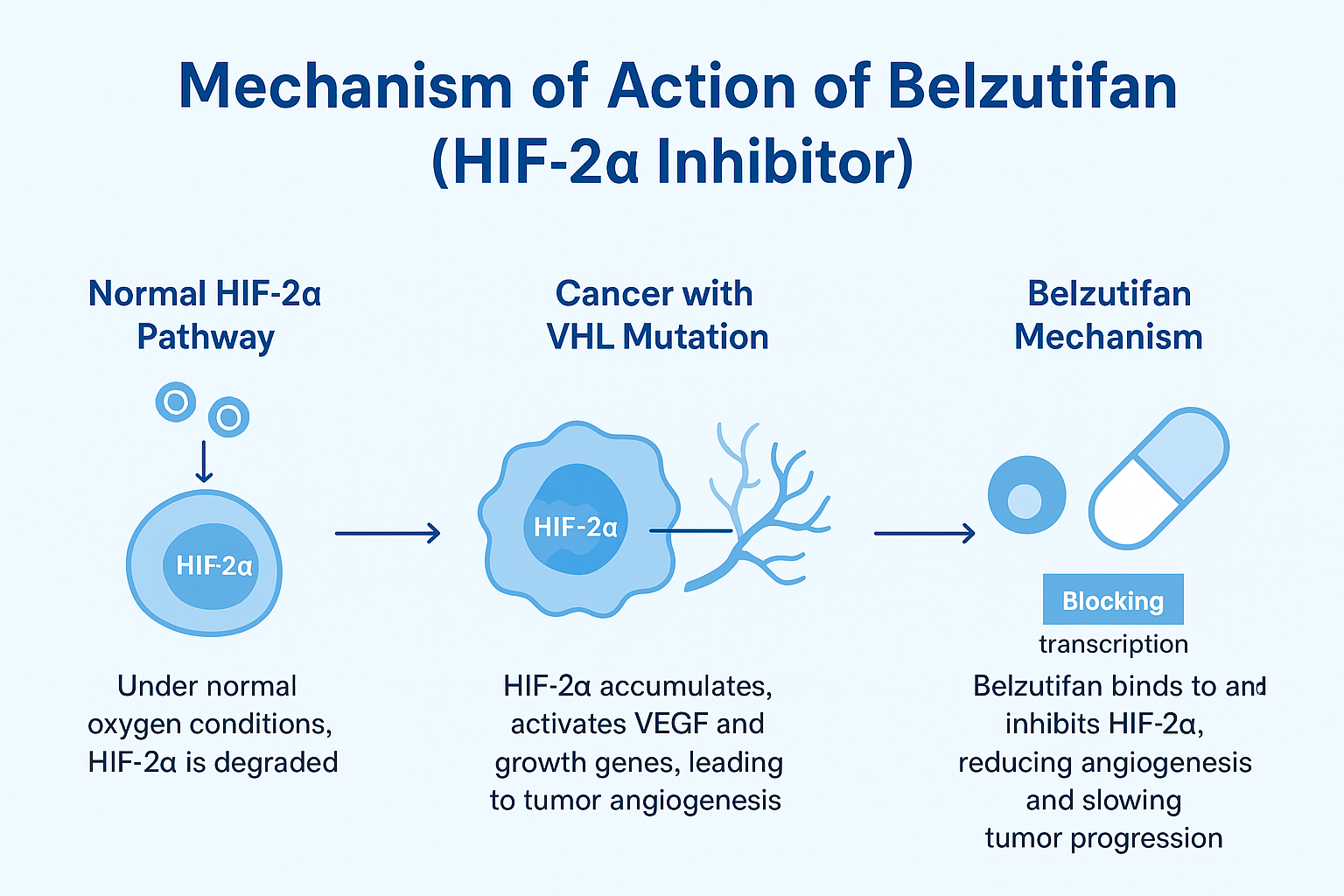
Under normal oxygen conditions, the HIF (hypoxia-inducible factor) pathway remains regulated. However, in tumors – particularly in VHL-mutated cancers – this pathway becomes abnormally activated, leading to excessive production of growth factors that drive tumor growth.
Belzutifan works by blocking the HIF-2α protein, a transcription factor that drives this abnormal growth. In doing so, it:
• Slows tumor growth
• Reduces blood vessel formation (angiogenesis)
• Deprives tumors of the oxygen and nutrients they need to survive
This targeted mechanism provides impressive clinical benefits, but it also explains many of the belzutifan side effects, as HIF-2α is involved in normal oxygen regulation and erythropoiesis (red blood cell production).
Who Uses Belzutifan?
Belzutifan is generally prescribed for adults with:
- Von Hippel-Lindau (VHL) disease with associated tumors not requiring immediate surgery.
- Advanced or metastatic renal cell carcinoma (RCC) previously treated with other therapies.
- Certain brain or pancreatic tumors linked to VHL mutations.
The drug is usually taken as an oral tablet (120 mg once daily), with or without food, and treatment continues as long as it remains effective and tolerable.
Common Belzutifan Side Effects
Like most targeted therapies, belzutifan side effects can vary in severity from mild to moderate. Most patients tolerate the drug well, but awareness helps in early recognition and management.
1. Anemia (Low Red Blood Cell Count)
This is the most common side effect of Belzutifan.
Because the drug inhibits HIF-2α—which normally helps produce erythropoietin—patients often experience reduced red blood cell production.
Symptoms may include:
- Fatigue or weakness
- Pale skin
- Dizziness
- Shortness of breath
Management Tips:
- Regular blood tests to monitor hemoglobin levels
- Iron supplementation or erythropoiesis-stimulating agents if needed
- Dose modification in severe cases
2. Fatigue
Fatigue is a frequent complaint among patients taking Belzutifan. It can result from both anemia and the body’s metabolic adjustment to the drug.
How to manage fatigue:
- Maintain a consistent sleep routine
- Stay hydrated and eat nutrient-rich meals
- Engage in light physical activity (walking, yoga)
- Discuss severe tiredness with your doctor
3. Shortness of Breath (Dyspnea)
As red blood cell levels drop, oxygen-carrying capacity decreases, leading to breathlessness, especially during exertion.
Monitoring oxygen levels and reporting persistent symptoms promptly is crucial.
4. Dizziness or Lightheadedness
Due to mild anemia or reduced oxygenation, some patients experience dizziness.
Avoid sudden position changes and ensure adequate hydration.
5. Headache
Mild to moderate headaches may occur, often due to hypoxia-related changes in blood vessels. Over-the-counter pain relief (as approved by a doctor) usually helps.
6. Nausea
Some patients report mild gastrointestinal discomfort, including nausea or upset stomach, which can often be managed by taking Belzutifan with food.
7. Weakness or Lethargy
Feeling weak is a common symptom related to lower energy metabolism during treatment. Proper nutrition and mild exercise can improve stamina.
Less Common or Rare Side Effects of Belzutifan
While rare, some belzutifan side effects may be more serious and require medical intervention.
1. Hypoxia (Low Oxygen Levels)
Because Belzutifan affects oxygen-sensing pathways, some individuals experience low blood oxygen (hypoxia).
Symptoms:
- Rapid breathing
- Blue-tinted lips or fingertips
- Chest pain
Management:
Doctors often recommend pulse oximetry monitoring, especially for patients with pre-existing lung or heart conditions.
2. Elevated Creatinine Levels
Mild increases in serum creatinine (a kidney function marker) have been observed.
Routine lab tests ensure early detection and management.
3. Cognitive Changes
Some users report memory lapses or difficulty concentrating, likely due to reduced oxygen delivery to the brain. Adequate rest and hydration can help mitigate this effect.
4. Rare Allergic Reactions
Severe allergic responses (rash, swelling, itching, or trouble breathing) are uncommon but require immediate medical attention.
Managing Belzutifan Side Effects: Practical Tips
Managing belzutifan side effects effectively can make treatment more tolerable and successful. Here are some strategies:
1. Regular Monitoring
Your healthcare provider will schedule:
- Blood tests (hemoglobin, creatinine, liver enzymes)
- Oxygen saturation checks
- Blood pressure monitoring
Early detection helps prevent complications.
2. Dietary Support
A diet rich in iron, folate, and vitamin B12 supports red blood cell production.
Examples include leafy greens, lean meat, eggs, and fortified cereals.
3. Hydration
Proper hydration aids kidney function and reduces fatigue.
4. Communication with Healthcare Providers
Always report new or worsening symptoms promptly. Never adjust or skip doses without consulting your doctor.
5. Dose Adjustment
In cases of severe anemia or hypoxia, your doctor may pause or reduce the dose of Belzutifan temporarily.
Precautions and Warnings
1. Pregnancy and Breastfeeding
Belzutifan can harm fetal development and is not recommended during pregnancy.
Patients of reproductive potential should use effective contraception during treatment and for at least one week after the last dose.
It’s also not advised during breastfeeding, as the drug may pass into breast milk.
2. Drug Interactions
Belzutifan is metabolized mainly by CYP2C19 and UGT2B17 enzymes.
Avoid taking it with strong enzyme inducers or inhibitors without medical guidance, as they can alter the drug’s effectiveness or increase side effects.
3. Pre-Existing Conditions
People with chronic anemia, Hypertrophic Cardiomyopathy, or chronic obstructive pulmonary disease (COPD) should use Belzutifan cautiously, as hypoxia risk increases.
Belzutifan vs. Similar Medications
Belzutifan represents a new generation of HIF-2α inhibitors, offering advantages over older treatments. Here’s how it compares:
| Feature | Belzutifan (Welireg) | Sunitinib (Sutent) | Cabozantinib (Cabometyx) |
| Drug Class | HIF-2α inhibitor | Tyrosine kinase inhibitor | Tyrosine kinase inhibitor |
| Mechanism | Blocks HIF-2α activity | Inhibits VEGF receptors | Inhibits multiple kinases |
| Common Side Effects | Anemia, fatigue, dizziness | Hypertension, diarrhea, mouth sores | Diarrhea, fatigue, hand-foot syndrome |
| Oral Dose | Once daily | Once daily | Once daily |
| Tolerability | Generally well-tolerated | Moderate | Moderate |
Compared to traditional TKIs, Belzutifan causes fewer gastrointestinal issues, but anemia and hypoxia remain its main concerns.
Recent Clinical Research and Developments
Since its approval, ongoing research continues to explore Belzutifan’s broader potential.
- Combination Therapies: Trials are investigating Belzutifan with immune checkpoint inhibitors (like pembrolizumab) for advanced RCC.
- Expanded Indications: Studies suggest potential benefits in uterine, liver, and pancreatic cancers with hypoxia-driven growth.
- Long-Term Safety Data: As of 2025, long-term data shows manageable belzutifan side effects with consistent monitoring.
The FDA and multiple international agencies continue to evaluate new indications based on emerging results.
When to Seek Immediate Medical Help
Although most side effects are mild, contact your doctor immediately if you experience:
- Severe shortness of breath
- Signs of hypoxia (blue lips, confusion)
- Extreme fatigue or fainting
- Rapid heartbeat or chest discomfort
- Allergic reactions (rash, swelling, difficulty breathing)
Early medical intervention can prevent serious complications.
Patient Experiences and Quality of Life
Many patients report that although the side effects of belzutifan are noticeable, they are manageable with proper care. Fatigue and weakness are the most common complaints, but with ongoing support, most individuals successfully continue treatment. Regular check-ups with a healthcare team, along with lifestyle changes, can significantly improve comfort and outcomes.
Conclusion: Balancing Benefits and Belzutifan Side Effects
Belzutifan is a breakthrough in targeted cancer therapy, offering new hope for patients with VHL disease and renal cell carcinoma. Its unique mechanism of action provides meaningful tumor control with a tolerable side effect profile for most users.
However, belzutifan side effects – particularly anemia and hypoxia – require ongoing monitoring and active management. With personalized care, patients can achieve significant benefits while minimizing risk.
As ongoing research advances our understanding, belzutifan is poised to remain a cornerstone in precision oncology – balancing efficacy, safety, and improved quality of life.