

Table of Contents
Introduction
Denosumab is a potent monoclonal antibody that is widely used to treat bone-loss conditions such as osteoporosis, bone metastases, and bone complications associated with cancer. It works by inhibiting osteoclast activity, which reduces bone resorption and improves bone density.
Although denosumab has been shown to be highly effective, patients and healthcare professionals should be aware of the potential side effects of denosumab injection, which can range from mild to serious.
In this comprehensive 2025 guide, we will explore:
• How denosumab works
• Common and rare denosumab injection side effects
• How to manage and prevent them
• Frequently asked questions and safety recommendations
What Is Denosumab?
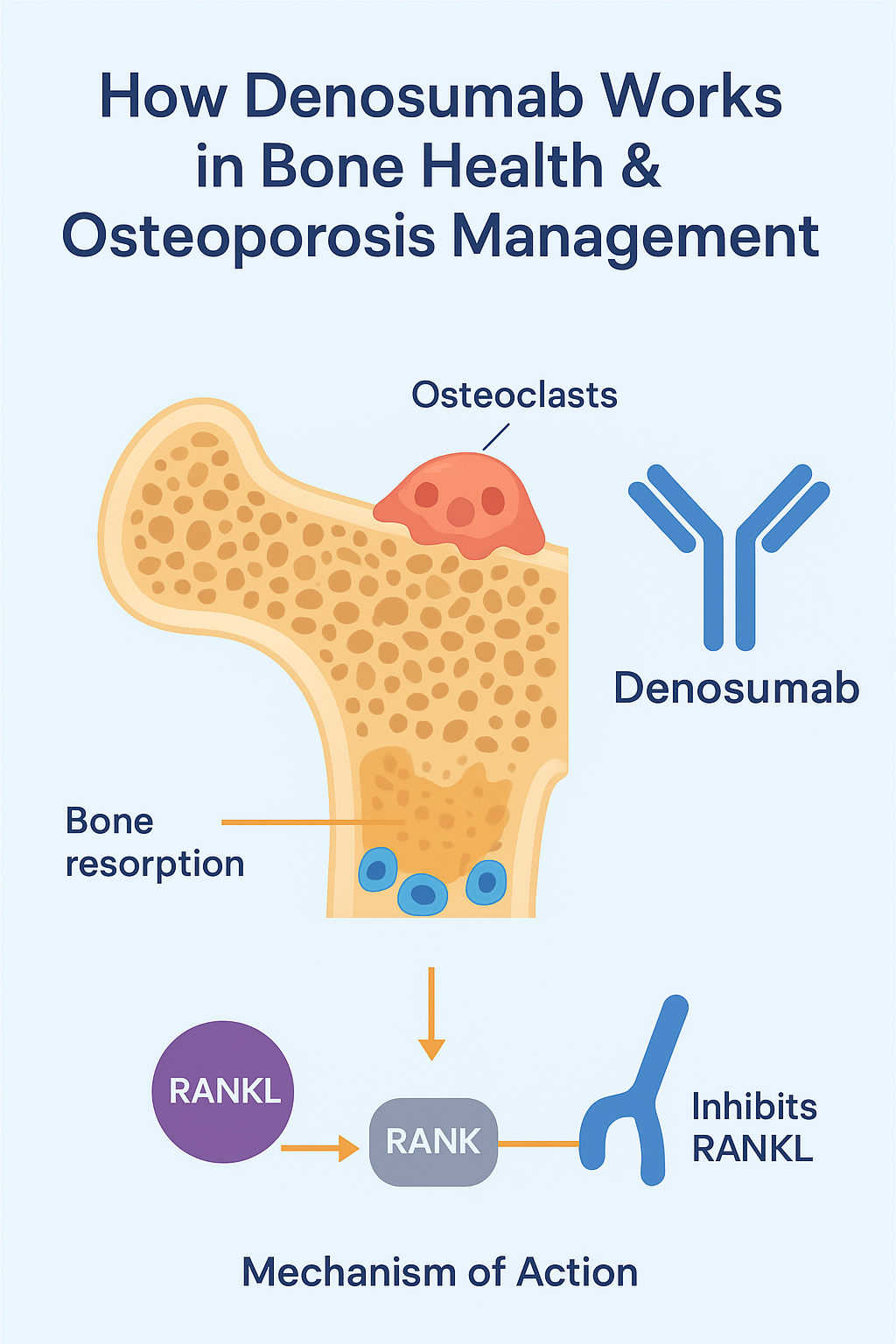
Denosumab is a human monoclonal antibody that targets a protein called RANK ligand (RANKL) – a key mediator in the formation and function of osteoclasts, which are responsible for bone breakdown. By binding to RANKL, denosumab inhibits osteoclast formation, thereby reducing bone loss and increasing bone mass.
Brand Names of Denosumab:
- Prolia® – Used for osteoporosis and bone loss prevention.
- Xgeva® – Used for bone complications in cancer patients (such as bone metastasis).
Mechanism of Action:
Denosumab works by blocking RANKL from activating its receptor (RANK) on the surface of osteoclasts. This inhibition:
• Reduces bone resorption
• Increases bone density
• Reduces the risk of fractures
Indications and Uses of Denosumab
Denosumab is used for several medical conditions related to bone health:
1. Osteoporosis in postmenopausal women
Denosumab helps increase bone mineral density and reduces the risk of spine and hip fractures.
2. Osteoporosis in men
It is used in men who are at increased risk of fractures due to low testosterone or other causes of bone loss.
3. Cancer-related bone diseases
For patients with bone metastases from solid tumors or multiple myeloma, denosumab helps reduce skeletal-related events (SREs) such as fractures or spinal compression.
4. Glucocorticoid-induced osteoporosis
Long-term steroid use weakens bones. Denosumab provides an effective alternative to bisphosphonates.
5. Bone giant cell tumor
In adults and adolescents whose bones have stopped growing, denosumab helps control tumor growth.
Denosumab Injection Side Effects
Common Denosumab Injection Side Effects
Like any biologic medication, denosumab can cause side effects. Understanding these helps patients stay alert and manage symptoms effectively.
Below are the most common denosumab injection side effects reported in clinical trials and post-marketing studies.
1. Muscle, Joint, or Back Pain
- Frequency: Very common (up to 20% of users)
- Description: Mild to moderate pain in bones, joints, or muscles, usually temporary.
- Tip: Use mild analgesics like acetaminophen after consulting your doctor.
2. Low Calcium Levels (Hypocalcemia)
- Denosumab can reduce calcium levels, especially in patients with kidney issues.
- Symptoms: Muscle cramps, tingling in fingers, or confusion.
- Tip: Take calcium and vitamin D supplements as prescribed to prevent hypocalcemia.
3. Skin Reactions
- Redness, rash, or eczema may occur at the injection site.
- Symptoms usually resolve within a few days.
4. Fatigue and Weakness
- Feeling unusually tired or weak may occur during initial doses.
5. Infections
- Denosumab slightly increases infection risk, particularly urinary tract infections (UTIs) or respiratory infections.
- Maintain good hygiene and report persistent fever or sore throat to your doctor.
Serious Denosumab Injection Side Effects
While most side effects are mild, certain rare but serious adverse effects may occur. Immediate medical attention is required if these symptoms appear.
1. Osteonecrosis of the Jaw (ONJ)
- A rare but serious condition involving jawbone death.
- More common in cancer patients receiving high-dose Xgeva®.
- Symptoms: Jaw pain, swelling, loose teeth, poor healing after dental work.
- Prevention: Maintain excellent oral hygiene and have a dental exam before starting denosumab.
2. Atypical Femur Fractures
- Rare fractures in the thigh bone may occur after long-term use.
- Symptoms: Dull aching pain in the thigh or groin.
3. Severe Hypocalcemia
- Critically low calcium levels can cause heart rhythm issues or seizures.
- Patients with renal impairment are at higher risk.
4. Hypersensitivity Reactions
- Although uncommon, allergic reactions like swelling, itching, or difficulty breathing can occur.
5. Delayed Fracture Healing
- Some studies indicate slightly delayed healing in certain cases.
Long-Term Denosumab Injection Side Effects
Denosumab’s long-term use has been generally safe in clinical trials up to 10 years, but ongoing monitoring is vital.
Potential long-term side effects:
- Persistent low calcium levels
- Rebound bone loss after discontinuation
- Increased fracture risk if therapy is abruptly stopped
Rebound Effect After Stopping Denosumab
When denosumab is discontinued, bone turnover may increase rapidly, leading to a “rebound effect” – an increased risk of vertebral fractures.
Solution:
Switching to another antiresorptive agent (such as bisphosphonates) is recommended after stopping denosumab to maintain bone density.
How to Reduce Denosumab Injection Side Effects
Here are some strategies to reduce your risk:
1. Ensure adequate calcium and vitamin D intake before and during treatment.
2. Get regular blood tests to monitor calcium and kidney function.
3. Tell your dentist before any dental procedures.
4. Don’t skip doses; stopping the medication suddenly increases your risk of fractures.
5. Report unusual pain in the jaw, hip, or groin immediately.
6. Stay hydrated and eat a healthy diet.
Benefits of Denosumab Injection
Despite its side effects, denosumab has major therapeutic benefits:
• Significantly reduces spine and hip fractures in osteoporosis.
• Provides an alternative drug for patients who are intolerant to bisphosphonates.
• Convenient six-month dosing schedule (Prolia).
• Effective in cancer-related bone disease (Zegeva).
• Long-term safety and efficacy demonstrated in multiple trials.
Dosage and Administration
| Formulation | Indication | Dose | Frequency |
| Prolia® | Osteoporosis | 60 mg | Every 6 months |
| Xgeva® | Bone metastases | 120 mg | Every 4 weeks |
| Giant Cell Tumor | Bone tumor control | 120 mg | Every 4 weeks (with loading doses) |
- Administered via subcutaneous injection (usually in upper arm, thigh, or abdomen).
- Should be given by a healthcare professional.
Precautions Before Taking Denosumab
- Tell your doctor if you have:
- Kidney disease
- Low calcium levels
- Immune disorders
- Dental issues
- Pregnancy and Breastfeeding:
- Not recommended during pregnancy.
- Consult your doctor if planning to conceive or breastfeed.
- Drug Interactions:
- Avoid taking other immunosuppressants without medical advice.
- Inform your healthcare provider about all medications you use.
Denosumab vs. Bisphosphonates
| Feature | Denosumab | Bisphosphonates |
| Mechanism | RANKL inhibitor | Osteoclast inhibitor |
| Administration | Injection (every 6 months) | Oral/IV (weekly/monthly) |
| Reversibility | Reversible effect after stopping | Long bone retention |
| Side Effects | Hypocalcemia, ONJ | GI upset, ONJ |
| Best For | Kidney-impaired or non-compliant patients | Patients tolerating oral meds |
Managing Common Side Effects at Home
| Side Effect | What to Do |
| Muscle pain | Gentle stretching, warm compress, mild painkillers |
| Fatigue | Rest, hydration, balanced diet |
| Skin rash | Use gentle moisturizers, avoid scratching |
| Hypocalcemia | Take calcium + vitamin D regularly |
| Nausea | Eat small, frequent meals, avoid heavy foods |
Monitoring During Denosumab Therapy
Regular monitoring ensures safety and early detection of side effects.
| Test | Frequency | Purpose |
| Serum calcium | Before and after each dose | Detect hypocalcemia |
| Renal function | Every 6–12 months | Assess kidney safety |
| Bone density (DEXA) | Every 1–2 years | Evaluate effectiveness |
| Dental check | Before and during therapy | Prevent ONJ |
Lifestyle Tips for Better Bone Health
To complement denosumab treatment:
- Exercise regularly (especially weight-bearing workouts)
- Eat calcium-rich foods (milk, almonds, spinach)
- Avoid smoking and alcohol
- Get adequate sunlight for vitamin D synthesis
These habits enhance treatment outcomes and overall bone strength.These habits enhance treatment outcomes and overall bone strength.
Conclusion
Denosumab has exceptional benefits in improving bone density, reducing the risk of fractures, and improving quality of life for patients with osteoporosis and cancer.
Denosumab injection can cause side effects, but active management, medical supervision, and lifestyle adjustments make it a safe and effective therapy for long-term use.
If you are starting or currently taking denosumab therapy, always follow your healthcare provider’s guidance and never skip doses or stop taking it without consulting your doctor.