
Table of Contents
The landscape of oncology is continually reshaped by the introduction of targeted therapies that offer new hope to patient populations with historically poor prognoses. Among the most recent and significant advancements is the accelerated sevabertinib approval by the U.S. Food and Drug Administration (FDA) on November 19, 2025. This landmark decision introduces a novel, oral, targeted treatment for adults battling locally advanced or metastatic, non-squamous non-small cell lung cancer (NSCLC) driven by HER2 (ERBB2) tyrosine kinase domain (TKD) activating mutations. The sevabertinib approval marks a critical milestone, providing a much-needed therapeutic option for patients who have progressed following prior systemic therapy.
Non-small cell lung cancer remains a leading cause of cancer-related mortality worldwide. While the discovery of oncogenic drivers like EGFR and ALK has revolutionized treatment for large subsets of patients, the HER2-mutant population has historically lagged in dedicated, highly effective oral therapies. HER2 mutations, particularly exon 20 insertions, are found in approximately 1% to 4% of NSCLC cases, representing a distinct molecular subtype that is often resistant to standard chemotherapy and first-generation EGFR inhibitors. The challenge has been developing a drug that can selectively and potently inhibit the mutant HER2 protein while maintaining a manageable safety profile. The recent sevabertinib approval is a direct answer to this unmet clinical need, validated by compelling clinical data.
The Significance of Sevabertinib Approval for the NSCLC Community
The The clinical significance of sevabertinib’s clearance cannot be overstated. For years, treatment for HER2-mutant NSCLC often relied on off-label use of older HER2-targeting agents or the use of antibody-drug conjugates (ADCs), which, while effective, require intravenous administration and can be associated with unique toxicities. Sevabertinib (marketed as Hyrnuo by Bayer HealthCare Pharmaceuticals Inc.) is a small-molecule tyrosine kinase inhibitor (TKI) that offers the convenience of an oral formulation, potentially improving patient quality of life and adherence.
This specific approval is contingent on the identification of the HER2 TKD activating mutation using an FDA-approved companion diagnostic device, specifically the Oncomine Dx Target Test. This requirement underscores the principle of precision medicine: ensuring that the right drug is given to the right patient based on their tumor’s molecular profile. The drug’s approval thus reinforces the necessity of comprehensive genomic testing at diagnosis or progression. The accelerated nature of this approval reflects the FDA’s recognition of the drug’s potential to address a serious condition and provide a meaningful advantage over existing therapies.
Mechanism of Action: Targeting the HER2/EGFR Axis
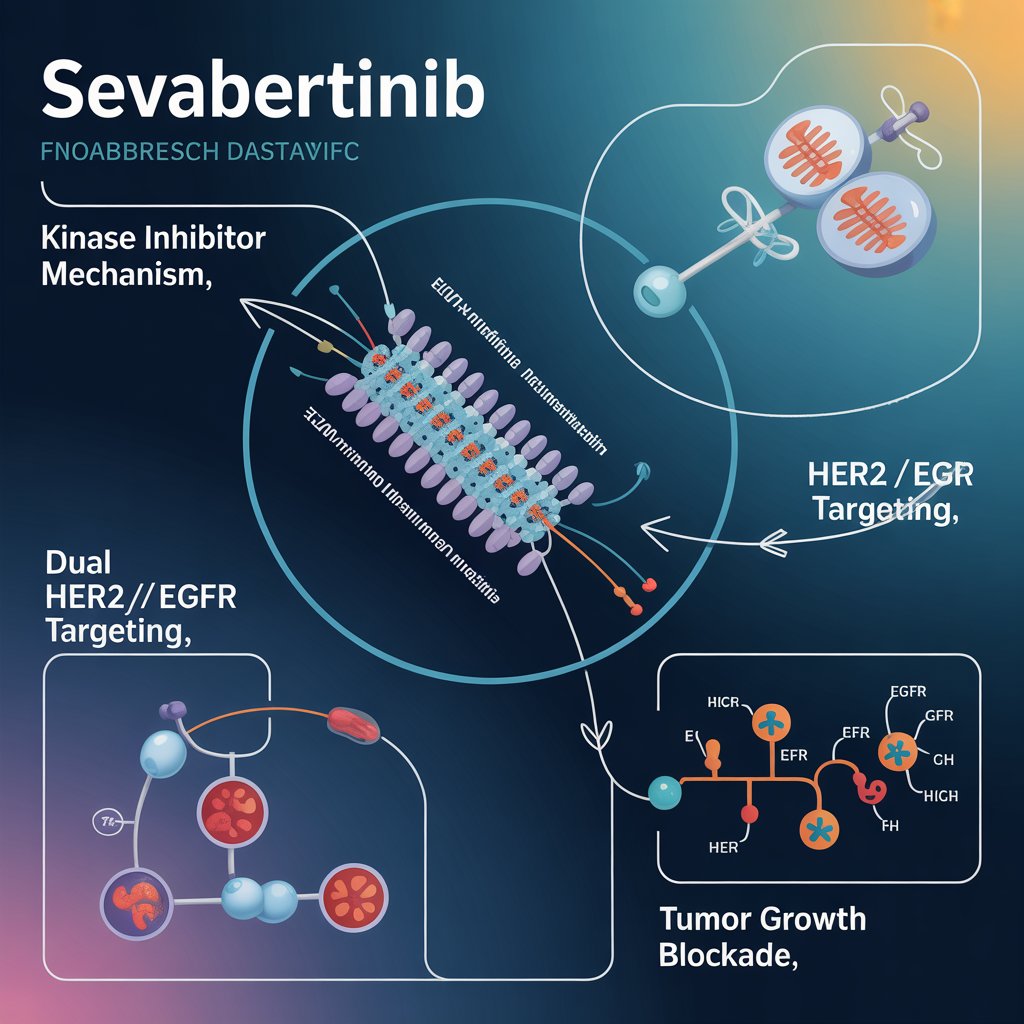
Sevabertinib is classified as a kinase inhibitor, but its mechanism of action is particularly sophisticated. It is designed to be a potent and selective inhibitor of the HER2 (ERBB2) tyrosine kinase domain, with a specific focus on the challenging exon 20 insertion mutations. These insertions cause a conformational change in the HER2 protein, making it constitutively active and driving uncontrolled cell proliferation. Sevabertinib’s molecular structure allows it to bind effectively to this altered kinase domain, thereby blocking the downstream signaling pathways that fuel tumor growth.
Furthermore, sevabertinib is noted to have dual activity, also targeting the epidermal growth factor receptor (EGFR). This dual inhibition is crucial because EGFR and HER2 are closely related members of the ERBB family of receptor tyrosine kinases, and their signaling pathways often cross-talk. By inhibiting both, sevabertinib offers a more comprehensive blockade of the pro-survival and pro-proliferative signals in the cancer cell. This targeted approach is what differentiates the sevabertinib approval from broader, less specific treatments, promising higher response rates and greater durability of effect. The success of this new agent is intrinsically linked to this highly selective and potent mechanism.
The Pivotal SOHO-01 Trial: Data Driving Sevabertinib Approval
The foundation for this approval is the compelling data generated from the Phase I/II SOHO-01 trial (NCT05099172). This open-label, single-arm, multicenter, multi-cohort study evaluated the efficacy and safety of sevabertinib in patients with advanced HER2-mutant NSCLC. The trial included patients who had received prior systemic therapy, which is the population covered by the initial sevabertinib approval indication.
The SOHO-01 trial demonstrated remarkable anti-tumor activity, particularly in the cohort of patients who were naive to prior HER2-targeted therapy. Among 70 such patients with locally advanced or metastatic NSCLC, the confirmed objective response rate (ORR) was a striking 71% (95% CI: 59, 82). This high ORR signifies that a large majority of patients experienced a measurable reduction in their tumor size following treatment with sevabertinib. The median duration of response (DOR) was 9.2 months (95% CI: 6.3, 15.0), with 54% of responding patients maintaining their response for six months or longer. These figures provided strong evidence of the drug’s clinical benefit, paving the way for the accelerated sevabertinib approval.
The trial also evaluated a more heavily pre-treated population: 52 patients who had previously received HER2-targeted antibody-drug conjugates (ADCs). Even in this challenging, refractory group, sevabertinib showed meaningful activity, with an ORR of 38% (95% CI: 25, 53) and a median DOR of 7.0 months. The ability of sevabertinib to elicit responses in patients who have progressed on other HER2-targeted agents highlights its distinct mechanism and potential to overcome resistance mechanisms. This robust data across different treatment lines was instrumental in securing the drug’s clearance
The following table summarizes the key efficacy data from the SOHO-01 trial that supported the sevabertinib approval:
| Efficacy Endpoint | HER2-Targeted Therapy Naive Cohort (n=70) | Prior HER2-Targeted ADC Cohort (n=52) |
| Objective Response Rate (ORR) | 71% | 38% |
| Median Duration of Response (DOR) | 9.2 months | 7.0 months |
| Patients with DOR $ 6 months | 54% | 60% |
The The clinical trial results clearly established sevabertinib as a highly effective treatment option, justifying the FDA’s decision for this approval. The rapid and durable responses observed in the SOHO-01 study underscore the transformative potential of this new agent. The data suggests that for patients with HER2-mutant NSCLC, the drug’s clearance offers a new standard of care in the second-line setting.
The Accelerated Pathway and Global Context of Sevabertinib Approval
The FDA granted accelerated sevabertinib approval based on the objective response rate and duration of response observed in the SOHO-01 trial. The accelerated approval pathway allows for earlier patient access to promising drugs for serious conditions where there is an unmet medical need, provided the drug demonstrates an effect on a surrogate endpoint that is reasonably likely to predict clinical benefit. In this case, the high ORR and durable responses served as the surrogate endpoints. A condition of the accelerated approval is that the manufacturer must conduct post-marketing trials to verify and describe the clinical benefit, typically by demonstrating an improvement in overall survival or progression-free survival.
The regulatory journey for sevabertinib was also notable for its inclusion in Project Orbis, an initiative coordinated by the FDA’s Oncology Center of Excellence. Project Orbis provides a framework for concurrent submission and review of oncology drugs among international partners, including Health Canada, Israel’s Ministry of Health, and the United Kingdom’s Medicines and Healthcare products Regulatory Agency (MHRA). This collaborative approach facilitates faster global access to promising cancer treatments. The initial approval by the FDA, in collaboration with these international bodies, highlights the global recognition of this drug’s importance.
Furthermore, sevabertinib received several key designations from the FDA, including Breakthrough Therapy designation and Orphan Drug designation. The Breakthrough Therapy designation is granted to expedite the development and review of drugs intended to treat a serious condition and where preliminary clinical evidence indicates that the drug may demonstrate substantial improvement over available therapy. The Orphan Drug designation supports the development of drugs for rare diseases, reflecting the relatively small population of HER2-mutant NSCLC patients. These designations collectively streamlined the review process, culminating in the timely clearance of sevabertinib.**.
Safety Profile and Management of Adverse Events
While the efficacy data supporting the sevabertinib approval is impressive, a comprehensive understanding of its safety profile is essential for clinical practice. Sevabertinib is generally well-tolerated, but like all targeted therapies, it is associated with specific adverse events that require careful monitoring and management.
The prescribing information for Hyrnuo includes warnings and precautions for several potential toxicities. The most common adverse event reported in the SOHO-01 trial was diarrhea. This is a common class effect for many TKIs and is typically manageable with supportive care, including anti-diarrheal medications and dose modifications. Other significant warnings associated with the sevabertinib approval include:
•Hepatotoxicity: Elevations in liver enzymes (ALT/AST) have been observed, necessitating regular monitoring of liver function tests.
•Interstitial Lung Disease (ILD)/Pneumonitis: This is a serious, though less common, adverse event associated with many lung cancer therapies. Patients must be monitored for new or worsening respiratory symptoms.
•Ocular Toxicity: Visual disturbances may occur, requiring ophthalmologic examinations.
•Pancreatic Enzyme Elevation: Increases in amylase and lipase levels have been reported.
•Embryo-Fetal Toxicity: Based on its mechanism of action and animal studies, sevabertinib can cause fetal harm, requiring effective contraception for patients of reproductive potential.
The successful implementation of sevabertinib in clinical settings will depend heavily on the proactive management of these side effects.ts. Clinicians must be vigilant in monitoring patients and adjusting the recommended dosage of 20 mg orally twice daily as needed to maintain a balance between efficacy and tolerability.
Future Directions and the Broader Impact of Sevabertinib Approval
The sevabertinib approval is not the end of the story; it is a significant beginning. The drug is currently approved for the second-line setting, but ongoing research is exploring its potential in earlier lines of therapy. A large, ongoing clinical trial is currently testing sevabertinib as a first-line treatment for patients with HER2-mutant NSCLC. Positive results from this trial could expand the indication and further solidify the role of sevabertinib as a foundational therapy for this patient population..
Furthermore, researchers are investigating sevabertinib’s activity in other challenging areas, such as patients with brain metastases. HER2-mutant NSCLC often metastasizes to the brain, and the ability of a TKI to penetrate the blood-brain barrier is a critical factor in treatment success. Early data suggests promising efficacy in patients with brain metastases, which could be a major differentiator for the drug in the future.[8].
The sevabertinib approval also contributes to the growing body of evidence supporting the use of highly selective TKIs in rare oncogenic driver mutations. It serves as a powerful proof-of-concept that dedicated drug development for small, molecularly defined patient subsets can yield substantial clinical benefits. This latest clearance will undoubtedly spur further research into other hard-to-treat mutations and resistance mechanisms..
In conclusion, the accelerated sevabertinib approval represents a monumental step forward in the treatment of HER2-mutant NSCLC. It provides a potent, oral, and targeted option, backed by impressive response rates from the SOHO-01 trial. The drug’s clearance is a testament to the power of precision oncology and offers renewed hope for patients facing this aggressive form of lung cancer. The full impact of this landmark decision will continue to unfold as it is integrated into clinical practice and as ongoing trials explore its potential in earlier treatment lines and challenging disease sites.